Get Full Government Meeting Transcripts, Videos, & Alerts Forever!
Get email alerts on the Legislative Process topic
No spam. Unsubscribe anytime.
House approves constitutional amendment proposal to allow narrow legislatively called special sessions
Summary
The House voted to place HJR 18 — a proposed constitutional amendment allowing the legislature to call itself into special session under narrowly defined circumstances and to permit gubernatorial-called sessions outside the Capitol — on the ballot. Supporters said the measure preserves checks and adds narrow safeguards; the House approved it 73–1.
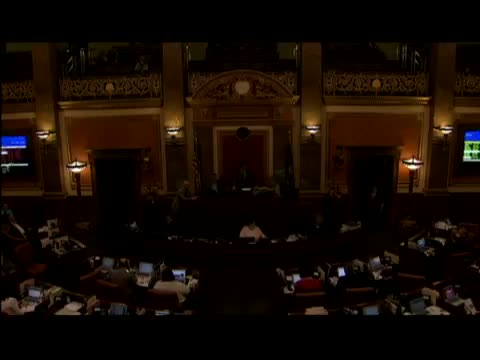
The Utah House on Feb. 27, 2018, approved HJR 18, a proposed amendment to the Utah Constitution that would (if ratified by voters) permit the legislature under narrow circumstances to call itself into special session, allow the governor to convene special sessions outside the state Capitol and place caps and timing limits on appropriations in legislatively called sessions.
Representative Wilson, sponsor of the resolution, said the proposal is narrowly drafted with safeguards including a 30‑day pause after adjournment of a general session, a 1 percent cap on appropriations in legislatively called special sessions and a 10‑day limit on such sessions. Supporters argued the change restores a limited ability for the legislature to respond to persistent fiscal crises, war or natural disasters and to check executive orders when urgent legislative action is needed.
Critics warned about removing a check on executive authority and about potential for quick action with limited public input. Representative Ward, among others, asked whether the polling mechanism used to determine member support would be public; Representative Wilson said the process would be similar to existing informal polls used for override sessions and that results can be shared. Representative Christiansen pointed to historic concerns with executive orders and argued the constitutional language must be sufficiently precise to avoid expanding executive authority through future interpretation.
After debate the House approved placing the amendment on the ballot with a recorded vote of 73–1. The resolution will move to the Senate for its concurrence and, if approved there, would be placed before voters at a future election.