Get Full Government Meeting Transcripts, Videos, & Alerts Forever!
Get email alerts on the Legal Reform Ada topic
No spam. Unsubscribe anytime.
House passes narrow fix targeting abusive ADA demand letters after heated debate
Summary
The House approved a second substitute to House Bill 115 to give courts remedies against abusive demand-letter schemes under the Americans with Disabilities Act while exempting nonprofits and legitimate communications; a motion to delay (circle) the bill failed amid competing concerns for small businesses and disability advocates.
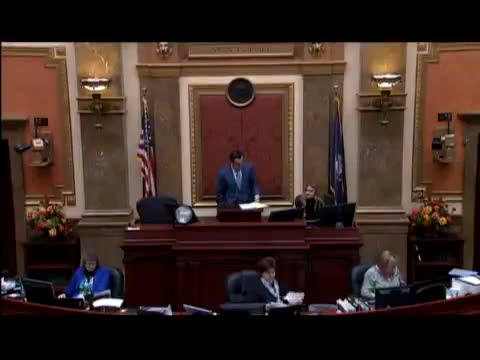
The Utah House on Feb. 26 passed Second Substitute House Bill 115, a measure sponsors described as a narrowly targeted response to alleged abusive demand-letter activity using the Americans with Disabilities Act (ADA).
Representative Thurston, sponsor of the bill, said Utah has seen a sharp rise in federal ADA suits and demand letters that threaten litigation unless businesses pay settlement amounts (he cited examples where one attorney filed 300 suits). Thurston argued the bill is aimed at "bad actors" who seek payment rather than remediation and that the substitute narrows the remedy and exempts nonprofits and communications that do not demand money upfront.
Representative LeVar Christiansen introduced the second substitute and described how the rewrite tightened definitions of "abusive" or "abusive process," cross-referenced existing procedural rules (including Rule 11 standards for frivolous litigation), and limited the bill to public-accommodations aspects of the ADA. "We targeted appropriately those who are abusing the process," Christiansen said, adding the substitute adopts remedies courts already have available and aims to provide clearer grounds for judicial action.
Opponents urged caution. Members who asked for a delay to allow additional stakeholder input — including disability-advocacy groups — argued that the bill could have unintended consequences that chill legitimate ADA claims and could make access harder to enforce. Representative King warned of potential constitutional and supremacy-clause questions if state law attempts to alter federal enforcement mechanisms.
A motion to "circle" (delay) the bill to allow further review and stakeholder input failed on the floor (17 yes, 51 no). Sponsors pressed forward and, after summation, the House approved Second Substitute HB 115 with 54 yea votes and 12 nay votes. The bill will be transmitted to the Senate for consideration.
Sponsors and proponents characterized the measure as a small, narrowly tailored fix to prevent exploitative settlement schemes while preserving legitimate disability-enforcement pathways; opponents said they wanted more time with stakeholders to ensure the bill would not unduly burden people with disabilities or curtail their ability to seek access.