Get Full Government Meeting Transcripts, Videos, & Alerts Forever!
Get email alerts on the Health Policy topic
No spam. Unsubscribe anytime.
House OKs measure allowing delayed non‑emergency behavioral‑health transfers to reduce overnight transport risk
Summary
HB322 permits EMS to delay non‑emergency transfers for medically stable behavioral‑health patients until daylight when at least one of three criteria is met (distance over 30 miles, insufficient staffing, or hazardous weather), and requires receiving hospitals to hold beds. The measure passed unanimously.
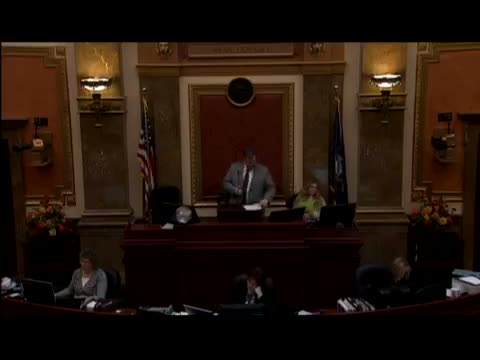
SALT LAKE CITY — The Utah House on Feb. 23 amended and passed House Bill 322, a bill designed to reduce the safety risks of long overnight transfers of medically stable behavioral‑health patients.
Sponsor Representative Red said the bill covers patients who are medically stable and do not require advanced life support during transfer. Under the bill, EMS providers may delay non‑emergency transfers until 6 a.m. when one of three conditions exists: the transport exceeds 30 miles, the local EMS has insufficient staffing, or hazardous weather makes transport unsafe. "This is a safety issue of trying to take a patient who needs help... But if we wait 4 or 5 hours until the light of day, we don't expose the patient or the EMS providing community to the danger of driving highways in the middle of the night unnecessarily," Red said on the floor.
The bill also requires the receiving hospital to hold the identified bed for the patient, acknowledging statewide shortages of behavioral‑health beds. Representative Malloy asked whether delays could harm patients; Red replied the patients covered are medically stable and would receive observation in the emergency room until daylight transfer.
The House adopted Amendment 1 (clarifying staffing and definitions) and passed the bill; the reading clerk recorded House Bill 322 receiving 66 yay votes, 0 nay votes.
Implementation notes: The floor discussion left operational specifics to EMS agencies and hospitals (staffing, observation procedures, and bed‑holding logistics) and sponsors indicated further coordination with health systems may be required.
Source: Floor remarks and vote tally announced on the House floor (Feb. 23, 2018).