Get Full Government Meeting Transcripts, Videos, & Alerts Forever!
Get email alerts on the Land Use topic
No spam. Unsubscribe anytime.
House approves land‑use compromise to clarify impact fees, reallocates permit fund for local training
Summary
HB250 clarifies which entities receive impact‑fee payments and redirects part of a building‑permit fee to the Office of Property Rights Ombudsman for training local officials; Representative Schultz said the change was the land‑use task force product and an adopted amendment slightly adjusts training fund shares.
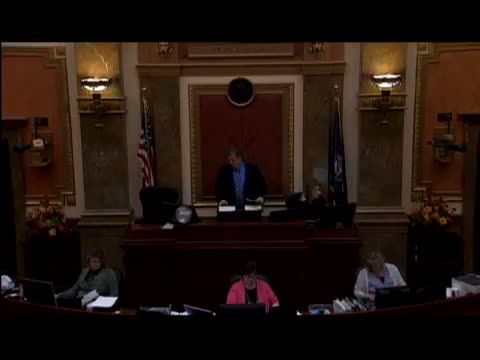
House Bill 250, a product of Utah’s land‑use task force, passed the House after amendment and discussion and will move to the Senate. The bill clarifies that impact‑fee payments are properly attributable to the entity that collected them (city, county or special service district) and reallocates a portion of an existing 1% building‑permit fee into the Office of Property Rights Ombudsman for training local elected officials and employees on codes and land‑use practice.
Representative Schultz, who ran the bill, said the measure reflects stakeholder compromise among counties, cities, contractors and developer groups and explained two main elements: clarifying the entity entitled to impact fees after a recent court case created ambiguity, and moving most of the 1% building‑permit fee toward training and ombudsman work. Representative Dunnegan successfully moved amendment #4 to adjust the split so building inspectors and other trade organizations retain a portion of the training fund while increasing resources for city and county training.
On the floor sponsors and amendment supporters explained the fund averaged roughly $600,000 a year; the amendment reduces some stakeholder shares but preserves most of the fund’s continuing education function while adding resources for local‑government training. The bill passed the House with a recorded tally of 66 yes and 0 no votes.
The House forwarded the amended bill to the Senate for further consideration and implementation details, including how the grants will be administered, will be managed by the designated office and stakeholder boards.