Get Full Government Meeting Transcripts, Videos, & Alerts Forever!
Get email alerts on the Air Quality topic
No spam. Unsubscribe anytime.
House approves three‑year diesel emissions testing pilot amid local‑control debate
Summary
The Utah House passed HB101, a three‑year pilot requiring diesel emissions testing in PM2.5 nonattainment counties; sponsors emphasized higher diesel failure rates and public‑health benefits while several members warned the measure could override county decision‑making.
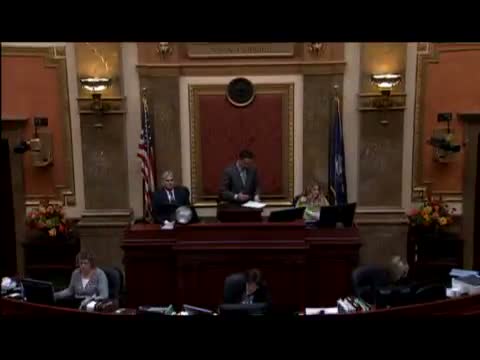
SALT LAKE CITY — The Utah House on Feb. 23 approved a three‑year pilot project to test light and medium‑duty diesel vehicle emissions in counties that now test gasoline but not diesel vehicles, the chamber’s reading clerk announced after a 56‑15 floor vote.
Representative Aaron, the bill’s floor sponsor, framed the measure as a targeted, data‑gathering intervention to address PM2.5 pollution from diesel engines. "Vehicles contribute 48% of our air pollution," Aaron said on the floor while describing data showing diesel vehicles are more likely to fail emissions testing and are linked to higher PM2.5 and NOx outputs.
The bill requires counties in PM2.5 nonattainment areas that currently test gasoline vehicles to set up a three‑year pilot for light and medium diesel vehicles, with exceptions for recent model years and a reporting requirement to the Natural Resources Interim Committee. Aaron said the pilot was developed in consultation with county commissioners and local air‑quality stakeholders and is intended to produce comparative data.
Opponents argued the measure intrudes on county authority. A representative opposing the bill said, "The decision about this testing is made by the counties... now it's our right, it's our privilege to take away decision making from the counties," urging caution about overriding locally elected commissioners.
The House adopted the bill after floor debate. Sponsors described the measure as a compromise and a limited, three‑year data collection effort rather than a permanent statewide mandate. The bill now moves to the Senate for its consideration.
What to watch: implementation details and the required report to the Natural Resources Interim Committee, including county‑level data and any recommended next steps based on pilot findings.
Source: Floor remarks and vote totals announced on the House floor (Feb. 23, 2018).