Get Full Government Meeting Transcripts, Videos, & Alerts Forever!
Get email alerts on the Prescription Drugs topic
No spam. Unsubscribe anytime.
House approves measure to explore importing lower‑cost drugs after tense debate over transparency
Summary
After hours of floor debate over a transparency provision, the Utah House passed a substituted bill (second substitute HB 163) directing the Department of Health to study and seek federal approval for a state wholesale importation program intended to lower prescription costs; the House deleted a contested transparency section before passage.
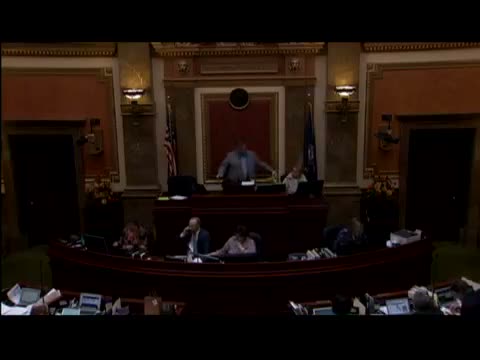
The Utah House on Feb. 14, 2018, approved the second substitute for House Bill 163, a measure that directs the state to study and pursue federal permission to import certain prescription drugs at lower cost and to develop a program if the U.S. Department of Health and Human Services determines it would be safe and would pass savings to consumers.
Supporters and opponents traded sharp exchanges on the House floor over a transparency provision that would have required drug manufacturers to disclose planned price increases for a small set of very high-cost drugs. Representative Thurston, the bill sponsor, said the provision was intended to prevent “chasing our tails” by giving the state notice if manufacturers planned to raise prices and to protect trade secrets while focusing disclosure on the most expensive drugs. “If you don’t ask, the answer is no,” Thurston said in urging lawmakers to try the program.
The debate split members. Representative Wilson argued the transparency language was unfairly limited to manufacturers and risked creating an uneven regulatory burden; he and other critics pressed that pharmacy benefit managers, hospitals and other intermediaries also affect final prices. Representative Ray, who opposed the bill in committee, warned the fiscal savings cited in the bill’s fiscal note mostly reflect private insurance markets and questioned whether state Medicaid and other public budgets would see the same windfall.
Thurston outlined the bill’s three‑phase approach: a study phase to design a safe supply chain, an application to the federal government for a wholesale importation waiver, and implementation only after federal approval. He stressed that development and approval by the secretary of HHS are prerequisites and said the development phase would seek grant funding to avoid taxpayer costs. Citing legislative fiscal analysis, the sponsor said the program could reduce state health‑insurance pharmacy costs and Medicaid spending, and suggested the program could be funded from savings if implemented.
Opponents repeatedly raised safety concerns and the risk that savings might not reach consumers, and some urged the House to ‘circle’ the bill to allow more time for review. Multiple members also noted the bill does not permit immediate personal importation by individuals; Thurston emphasized it is a state-controlled, wholesale importation model that would require FDA/HHS approval and compliance with safety standards.
Floor motions produced a concrete change: members voted to delete lines 303–337 of the second substitute (the transparency section relating to section 26‑62‑402), removing that contested disclosure requirement from the bill before the final vote. Representative Thurston said he would have preferred to keep the provision but accepted the body’s decision and framed passage as a first step toward broader reforms.
The final recorded action on the House floor was the passage of the second substitute of HB 163 (the transcript records the bill as carried to the Senate after passage). The bill requires the Department of Health to report back to the Legislature annually on progress and contemplates seeking federal approval before any implementation.
What happens next: with House passage, the measure will be sent to the Utah Senate for further consideration; the bill requires federal approval before any importation begins and includes reporting requirements to the Legislature.
Key quotes
“If you don’t ask, the answer is no,” Representative Thurston said in urging colleagues to allow the study and waiver application to proceed.
“We need to get the language right,” Representative Dunnegan said in support of removing the transparency language from the bill.
Representative Ward described patients mailing prescriptions to Canada because they cannot afford U.S. prices, arguing the state should explore legal, regulated options to reduce cost.
Ending
The House approved the amended second substitute of HB 163 and sent it to the Senate. The bill’s next procedural step is Senate consideration and — if advanced — the Department of Health must seek federal approval before any wholesale importation can occur.