Get Full Government Meeting Transcripts, Videos, & Alerts Forever!
Get email alerts on the Statuary Replacement topic
No spam. Unsubscribe anytime.
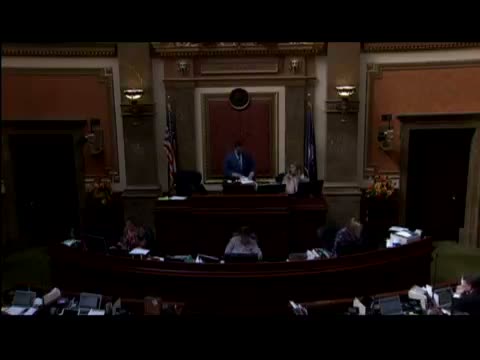
House moves to consider replacing Philo Farnsworth statue with Martha Hughes Cannon; floor debate ends, vote opened
Summary
The Utah House considered a third-substitute concurrent resolution recommending that the state's Statuary Hall statue of inventor Philo Farnsworth be replaced with one of physician and legislator Martha Hughes Cannon. Sponsors framed the measure as honoring Utah women; debate included an amendment to revisit the decision in 10 years. Voting was opened on the third substitute (final tally not recorded in the provided transcript).
The Utah House on Feb. 14 debated a concurrent resolution that would recommend replacing the Philo Farnsworth statue in the U.S. Capitol with one of Martha Hughes Cannon, a physician and early Utah legislator.
Representative Rebecca Edwards, the House sponsor, moved the third-substitute version of SCR 1 and framed the measure as a recognition of Utah's early role in women's suffrage and Cannon's public contributions. Edwards said the resolution will "shine" a spotlight on Utah's history of women's civic leadership and highlighted outreach from students and community groups supporting the change.
The floor saw a lengthy debate over an amendment (Amendment 1, moved by Representative Dawes) that would add a provision to revisit the choice in 10 years. Dawes said the amendment "lets us look at this in 10 years from now" to determine whether the state should rotate the statuary or make a different choice. Edwards told the chamber she supported the amendment as "within the spirit" of the resolution and that a housekeeping review would be appropriate.
Other members offered historically grounded arguments on both sides: supporters described Cannon as an exemplary choice to highlight women's accomplishments in the centennial era of the 19th Amendment; others argued a resolution is intended to be a straightforward honorific and that revisiting the designation later can be done administratively if needed. Several members pointed to the presence of schoolchildren in the gallery and the educational value of showcasing women's civic contributions.
After extended debate and votes on procedural motions, Speaker opened the floor vote on the third-substitute SCR 1. The transcript of the provided floor time ends with voting opened; a final recorded tally on the floor vote is not present in the supplied transcript.
Next steps: the resolution was substituted on the floor and voting was opened on the third-substitute SCR 1; the record in the provided transcript does not include the final recorded vote count or any subsequent transmission steps.