Get Full Government Meeting Transcripts, Videos, & Alerts Forever!
Get email alerts on the Justice Reinvestment Education Pilot topic
No spam. Unsubscribe anytime.
House debates pilot to let some conviction-level offenders earn technical certificates under JRI
Summary
Lawmakers debated uncircling a bill to pilot an education pathway for selected misdemeanor and third-degree felony convictions under the Justice Reinvestment Initiative; proponents cited a Cache County VOCA-funded pilot with 13 participants and three graduates and highlighted 90% attendance and B-average requirements.
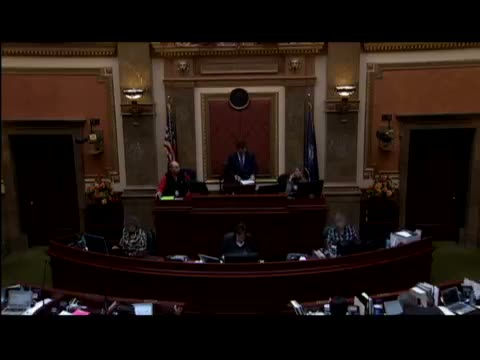
Representatives on the House floor discussed a proposal to expand Justice Reinvestment Initiative (JRI) goals by piloting a program that would allow certain people convicted of misdemeanors or third-degree felonies to earn technical-college certificates instead of serving sentences.
Representative Potter urged colleagues to 'uncircle' the bill and described the pilot as an education-first approach that pairs attorney screening with technical-college coursework and coordination with public defenders. He said the pilot in Cache County, funded by a VOCA Department of Justice grant, had 13 participants with three certificate graduates who found employment.
"It helps them find a career path, stay out of trouble, and improve their lives," Potter said, describing program requirements including 90 percent attendance and maintaining a B average to remain in the program. He said attorneys in the pilot work with courts and public defenders on pleas and dismissals and that counties have been supportive.
Lawmakers asked about concerns raised by the Commission on Criminal and Juvenile Justice and the Utah Board of Juvenile Justice; Potter said those bodies expressed questions about duplication with existing employment programs (for example, Dress for Success) and the role of attorneys, but he argued attorney involvement is necessary to coordinate with courts and ensure appropriate candidates are selected.
The floor discussion framed the pilot as a targeted, tracked program intended to reduce incarceration and produce cost savings. Potter cited a reported county cost savings of about $50,000 for 13 participants, itemizing roughly $11,200 in avoided incarceration costs and $39,300 in probation supervision costs.
Next steps
The motion to uncircle the bill was placed and the sponsor yielded for summation; Potter waived summation and the motion proceeded. Further committee consideration and formal votes were anticipated as the legislative process continued.