Get Full Government Meeting Transcripts, Videos, & Alerts Forever!
Get email alerts on the Family Planning topic
No spam. Unsubscribe anytime.
House debate centers on Medicaid family-planning waiver as Ward touts cost savings
Summary
Lawmakers debated House Bill 12, a measure directing the Department of Health to seek a Medicaid waiver to extend family-planning services to low-income Utahns. Supporters cited an $800,000 fiscal note and potential federal match and savings; opponents warned of coercive policy echoes and raised safety and private-sector alternatives.
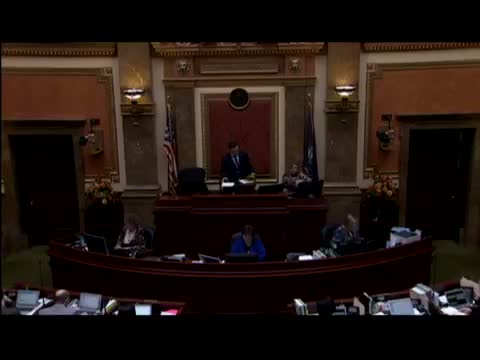
Salt Lake City — Lawmakers in the Utah House traded sharp arguments over House Bill 12 on Jan. 30 as the chamber considered a plan to direct the state Department of Health to apply for a federal Medicaid waiver to provide family-planning services to people under the poverty level.
Representative Raymond P. Ward, the bill sponsor, said the measure would extend contraceptive services — primarily IUDs, implants and related family-planning care — to people in the so-called coverage "gap" and that the change is narrowly tailored and fiscally responsible. "The fiscal note on the bill is $800,000 ongoing," Ward said, adding the waiver would produce a 90/10 federal match that could leverage substantial federal dollars. He said other states have returned net savings within a few years and estimated Utah could avoid costs tied to preterm births and additional Medicaid enrollment.
"This medical intervention has better proof of actually increasing economic outcomes for women," Ward said, arguing that spacing births improves family economic stability.
Supporters emphasized targeted benefits and limits. Representative (S19) said the bill "does not cover abortion" and described the program as focusing on contraceptive services already covered in family-planning lists used by Medicaid. Representative Polson urged colleagues to back what he called a "great fiscal choice" and noted his own family's experience with access to birth control.
Opponents raised historical and ethical objections. An unidentified representative (S6) framed the proposal as echoing past government policies that limited reproduction among marginalized groups and warned the program "represents a policy change that I find disturbing," citing historical sterilization practices and describing long-acting reversible contraceptives as "temporary sterilization." That speaker also questioned the need for state spending given manufacturer assistance programs, saying their research found Bayer-sponsored patient-assistance programs that provide devices at no cost.
Ward disputed the characterization of the bill as coercive and stressed that long-acting methods are reversible. "An IUD can be taken out. Within a week, you're back to the same degree of fertility that you were before having the IUD put in," Ward said in his summation. He also noted operational challenges with private assistance programs, saying they can be "difficult to work with" and may leave people without services despite on-paper eligibility.
Debate included clinical perspectives. A speaker identified as S21, who described medical experience, said IUDs are "pretty effective" and "relatively safe," but also stressed that options should be voluntary and that "one size does not fit everybody." Another lawmaker raised a point of order asking that remarks be germane to the bill.
Sponsor Ward told colleagues the waiver is expected to take effect Jan. 1, 2019, and that the program would primarily fund contraceptives such as IUDs, implants and injectable options, with a goal of reducing unintended pregnancies among families in intergenerational poverty. He and supporters said the waiver would reduce downstream Medicaid costs and could lower the number of abortions, citing estimates from other states.
The transcript records extended floor discussion and multiple points of view; the House opened and then closed voting on HB 12 during the session, but the roll-call outcome for final passage of HB 12 is not specified in the transcript provided.
Next steps: The bill was on the House third-reading calendar for further action; the transcript indicates the measure remained subject to formal voting procedures at the close of the recorded debate.
Sources: Floor remarks by Representative Raymond P. Ward and multiple floor members during the Jan. 30, 2018 House session, as recorded in the House transcript.