Get Full Government Meeting Transcripts, Videos, & Alerts Forever!
Get email alerts on the Tax Policy topic
No spam. Unsubscribe anytime.
Senate advances SB136 to change business income apportionment to market‑performance method
Summary
The Utah Senate voted to read SB136 for a third time after sponsor Senator Niederhauser said the bill shifts apportionment for services and intangibles from a cost‑of‑performance to a market‑performance approach, which the sponsor and supporters say will benefit companies with payroll and property in Utah. Senator Stevenson signaled he will seek coordinating language tied to the single‑sales‑factor election.
Senator Niederhauser told the Senate that SB136 changes how income from services and intangibles is attributed to Utah for corporate tax purposes, replacing a cost‑of‑performance rule with a market‑performance standard so that revenue is sourced where the market receives the service. He said the change would advantage companies that have property and payroll in Utah while income earned by performers outside the state would not be apportioned to Utah.
"Instead of taking an approach for sales using cost of performance, we're using a market performance approach," Senator Niederhauser said, describing how the bill would reallocate service income away from Utah when the market for those services is outside the state.
Senator Stevenson said he plans to work with the sponsor on an amendment to coordinate implementation of the measure with the availability of a single‑sales‑factor election in other states, warning that without such coordination Utah businesses could be disadvantaged. "I intend between now and tomorrow ... to work with Senator Niederhauser on an amendment that would coordinate this with the single sales factor," Stevenson said, adding that the goal is to avoid a situation in which firms could be taxed on more than 100% of their income.
Niederhauser said the committee had amended the bill and had consulted with industry participants, including Micron and private attorneys, and that he believed the issue had been addressed; he offered to meet with Senator Stevenson and other interested parties for further refinement.
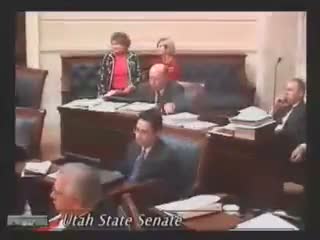
The Senate waived final summation, called the question and held a roll call vote to read SB136 for a third time. The clerk recorded 27 yes votes, 0 nay and 2 absent; the presiding officer announced the bill will be read for the third time.
Supporters emphasized the bill's potential to attract and protect firms that invest in Utah through payroll and property, while members seeking changes pressed for coordination to limit unintended tax exposure for multi‑state businesses. The next steps recorded in the session were procedural: the bill was ordered to be read for a third time and the sponsor signaled willingness to negotiate technical coordinating language.