Get Full Government Meeting Transcripts, Videos, & Alerts Forever!
Get email alerts on the Environment topic
No spam. Unsubscribe anytime.
Senate approves ban on high-phosphorus household dishwasher detergent
Summary
House Bill 303 would prohibit sale of household dishwasher detergents containing 0.5% or more phosphorus by weight (effective July 1, 2010). Sponsors said the change will help reduce phosphorus load in waterways; manufacturers reportedly support compliance. The Senate passed the bill 19–7–3.
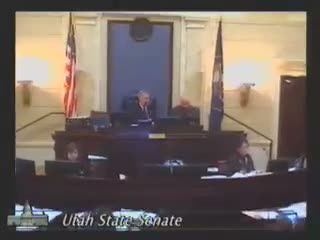
The Senate on March 5 approved House Bill 303, which would prohibit the sale of household dishwasher detergents containing 0.5% or more phosphorus by weight, with an effective date of July 1, 2010 to give manufacturers time to adjust.
Sponsor Senator Knudson said the move is intended to reduce excess phosphorus in Utah waterways, citing Utah Lake as an example of algal problems caused by nutrient loading: “This bill prohibits the sale of a household dishwashing detergent that contains 0.5% or more phosphorus by weight.” He told senators that manufacturers (including Procter & Gamble, by floor report) are preparing compliant products and that the measure could reduce about 4% of phosphorus entering the system from household dishwasher detergent.
Opponents questioned the scale and cost impacts. Senator Hickman asked about consumer costs and compatibility with newer dishwashers; the sponsor said manufacturers reported no expected increased cost and national adoption is underway. Supporters noted Division of Water Quality statements that nutrients are a significant contributor to water impairment and that other states have adopted similar limits.
Outcome: The Senate passed HB303 under suspension of rules; final roll-call recorded 19 yes votes, 7 nay votes, 3 absent. The bill will return to the House for further action.
Next steps: If enacted, the effective date is set to allow manufacturers time to supply compliant products; agencies will monitor industry compliance and downstream water-quality impacts.