Get Full Government Meeting Transcripts, Videos, & Alerts Forever!
Get email alerts on the Tax Policy topic
No spam. Unsubscribe anytime.
Senate passes wholesale quantity-based tax for moist snuff despite public-health objections
Summary
Senators approved House Bill 356 to change wholesale taxation of moist snuff from a price-based ad valorem model to a quantity-based excise; proponents argued for consistent tax policy, while health groups warned it could lower costs and increase youth usage.
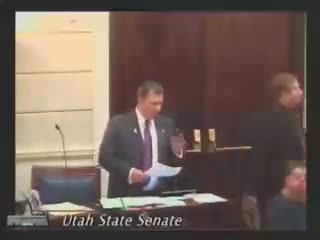
The Utah Senate debated and passed House Bill 356 on March 5, which converts the wholesale tax on moist snuff from an ad valorem (price-based) calculation to a uniform quantity-based excise.
Sponsor Senator Bramble said the measure seeks fairness in tax policy across tobacco products and to stop market gaming that creates winners and losers. "When you set tax policy that chooses winners and losers, these tobacco companies are gaming the system," he said, adding the bill brings consistency with federal taxation practices on some tobacco products.
Opponents, including Senator Wadhams, noted major public-health organizations — the Campaign for Tobacco-Free Kids, the American Cancer Society, the American Lung Association and the American Heart Association — oppose the bill. Wadhams raised concerns that the fiscal note’s revenue-neutral finding may not reflect market realities and that a lower effective tax on commonly sold product lines could boost affordability and youth usage. "I'm worried about increased youth usage... that's the concern I have," he said.
Senator Christensen said he would vote no given his alignment with the health groups’ concerns. Senator Peterson said discussions with stakeholders persuaded him the approach was workable and he supported passage.
After floor debate the Senate voted; the roll-call recorded a close outcome (the transcript records multiple tallies during debate and a final recorded passage later in the calendar). The bill passed the Senate (final reported tally: 15 yes, 12 no with 2 absent at one recorded count during the session) and was returned to the House for further action.
The Senate debate highlighted the tension between consistent tax policy and public-health goals; legislators urged monitoring sales patterns and public-health impacts if the new tax structure is implemented.