Get Full Government Meeting Transcripts, Videos, & Alerts Forever!
Get email alerts on the Procurement Reform topic
No spam. Unsubscribe anytime.
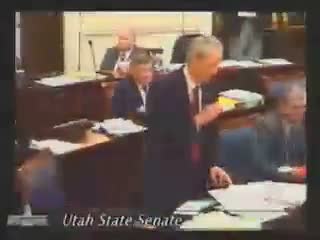
Senate approves private-proposal procurement pilot (HB426) after heated debate over study and executive control
Summary
Senate passes fourth substitute House Bill 426 to create an open procurement initiative enabling private and public stakeholders to submit conceptual proposals; debate centered on the bill’s late arrival, lack of committee hearing, and executive branch control of timelines and special funds.
The Utah Senate voted to pass fourth substitute House Bill 426 on March 5 after extended debate over whether the measure should be sent to interim study or considered immediately.
Sponsor Senator Niederhauser outlined HB426 as a mechanism allowing individuals or companies to submit conceptual procurement proposals to a committee established by the governor’s office (GOED/Board of Business and Economic Development with legislative advisory members). The committee reviews proposals for viability, forwards them to the affected agency and GOPB for economic feasibility analysis, and—if approved—opens a procurement process that could proceed to bid. "It creates this initiative process for procurement... where the public can start a procurement process," the sponsor said (presentation).
Opponents objected to the timing and process. Senator Christiansen argued the substitute had not had a Senate committee hearing and had not been vetted with agencies: "This substitute hasn't had a committee hearing... We're in the last couple hours. This is a 25 page bill. We're rushing into it," he said, and moved that the bill be sent to interim study. Supporters including Senators Stevenson, Bramble and Kilpach defended the substitute as a useful innovation modeled on Virginia’s program and argued negotiations had produced a reasonable compromise.
Discussion also covered executive-branch concerns about timing and authority; the sponsor said the fourth substitute allowed GOED to set timeframes by rule rather than statute and to manage a restricted special revenue fund needed to pay for economic feasibility studies. "They wanted to have a little more control over that and they wanted to have control over the restricted special revenue fund," Niederhauser said.
The motion to send HB426 to interim study failed, and the Senate proceeded to a roll-call vote under suspension of rules. The substitute passed the Senate, recorded as receiving 19 yes votes and 10 no votes. The bill was returned to the House for further action.
The passage sends a procurement pilot to the House after the Senate engaged in a full debate over stakeholder notice, executive authority, and whether more study was needed before implementation.