Get Full Government Meeting Transcripts, Videos, & Alerts Forever!
Get email alerts on the Session Votes Roundup topic
No spam. Unsubscribe anytime.
Senate final votes: executive pay, Head Start funds, transit and multiple appropriations advance
Summary
In a late-night session the Senate cleared multiple bills under suspension of the rules, including an executive compensation change, Head Start supplement with an amendment, transportation funding adjustments, urban trails appropriation and other measures; roll-call tallies are recorded on the floor for each item.
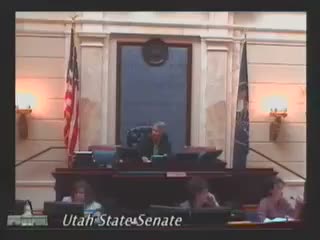
The Utah Senate processed a series of bills on the second and third reading calendars and approved a number of measures under suspension of the rules before adjourning.
Key floor actions included:
- First Substitute House Bill 330 (state supplemental funding for Head Start): Senators adopted Amendment No.1 to delete a slot count tied to a reduced appropriation (sponsor and amendment explained the change) and the substitute passed on a roll call reported as 19 yes, 6 no, 4 absent.
- Senate Bill 5 (Executive Compensation Revision): The measure, which ties certain executive officers’ pay to the governor’s salary (including a 2.5% raise for the governor and setting the state auditor at 95% of the governor’s salary as of 06/28/2008) and carries a $16,200 fiscal note, was considered under suspension of the rules and passed on final roll call (26 yes, 0 nay, 3 absent).
- First Substitute Senate Bill 299 (revision to local government): After floor debate and adoption of Amendment 4 and sponsor intent language, the first-substitute passed on a 21–7 roll call and was referred to the House.
- Senate Bill 286 (Transportation and Transit Amendments): Amendment 2 narrowed an exemption (county-of-first-class limitation and structure specificity) and the bill passed (roll call recorded: 21 yes, 3 no, 5 absent).
- First Substitute House Bill 242 (Transportation Funding Revision): Amendment 3 reallocated several line items (including adding $1,000,000 to State Street and $250,000 to 2300 East) and the first substitute passed (reported 22 yes, 1 no, 6 absent).
- Several appropriations and policy bills were also advanced or passed, including third substitute House Bill 104 (Urban Trails Appropriation — $500,000 total; recorded 22 yes, 4 no), second substitute House Bill 346 (Division of Real Estate amendments — recorded 25 yes, 0 no), first substitute House Bill 316 (substance-abuse priority for pregnant women — recorded 25 yes, 0 no), second substitute House Bill 80 (administrative rule penalties — recorded 25 yes, 0 no) and First Substitute House Bill 332 (use of public schools by community organizations — amended to exclude charter schools under certain leases and passed on roll call 21 yes, 8 no).
Many of the bills were advanced “under suspension of the rules” during a tightly scheduled floor session; several senators noted outstanding fiscal-note or drafting items that had been addressed by staff before final votes. The Senate adjourned to reconvene at 8:00 a.m. the next day.
Votes at a glance (selected, as recorded on the floor): - First Substitute House Bill 330: passed (19 yes, 6 no, 4 absent). - Senate Bill 5: passed (26 yes, 0 no, 3 absent). - First Substitute Senate Bill 299: passed (21 yes, 7 no, 1 absent). - Senate Bill 286: passed (21 yes, 3 no, 5 absent). - First Substitute House Bill 242: passed (22 yes, 1 no, 6 absent). - Third Substitute House Bill 104 (Urban Trails): passed (22 yes, 4 no, 3 absent). - Second Substitute House Bill 346: passed (25 yes, 0 no, 4 absent). - First Substitute House Bill 316: passed (25 yes, 0 no, 4 absent). - Second Substitute House Bill 80: passed (25 yes, 0 no, 0 absent recorded). - First Substitute House Bill 332: passed (21 yes, 8 no, 0 absent recorded).
What happens next: Bills that passed the Senate under suspension will be transmitted to the House when required or returned to the enrolling staff after signature motions recorded on the Senate floor. Several sponsors noted additional interim work or technical cleanup that may continue in committees.