Get Full Government Meeting Transcripts, Videos, & Alerts Forever!
Get email alerts on the Energy Renewables topic
No spam. Unsubscribe anytime.
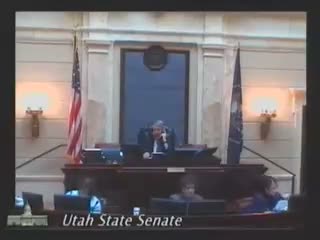
Utah Senate advances bill setting 20% renewable-energy target by 2025, with caveat of cost-effectiveness
Summary
Senate Bill 202, a negotiated renewable-energy measure sponsored by Sen. Bramble, would establish a 20% by-2025 aspirational target and reporting framework, drawing broad stakeholder agreement and passing a Senate procedural vote to advance the measure.
Senator Bramble, sponsor of Senate Bill 202, told the Senate the bill is the product of months of negotiation among utilities, developers, consumer advocates and state agencies and would create a state goal for renewable energy: 20% of electricity from renewable sources by 2025, where cost-effective. He said the bill includes reporting requirements and provisions for carbon-emission reduction certificates.
"It provides that Utah will establish a renewable energy standard with a target of 20% by the year 2025 and other 20% of our electricity coming from renewable sources by the year 2025 if cost effective," Bramble said on the floor, describing broad stakeholder engagement that included Rocky Mountain Power, the Public Service Commission, wind and solar developers and environmental groups.
Sen. Jones asked whether the measure differs from recommendations in the governor's task force; Bramble said the bill reflects participation from that task force and the governor's office and emphasized that this version avoids a strict mandate by requiring periodic reporting and evaluation of progress. Sen. McCoy — who earlier had advocated a stronger 25% target with interim benchmarks — told colleagues he would support SB202 as a step forward even though his previous proposal was more aggressive.
Floor debate highlighted companion policy work already under way, including a recent net-metering bill that senators said would work alongside SB202. Bramble told the chamber the bill also contains mechanisms intended to preserve competitive access for renewable generators and to allow utilities to manage multi-state system obligations.
The Senate recorded a roll-call advancing SB202 in the second-reading process; the tally recorded on the floor showed 27 yes votes, 0 nays and 2 absent. The sponsor said a substitute was planned on third reading with stakeholder agreement and that the body would give senators time to review the substitute before final action.
The bill will continue through the legislative process for further consideration and any technical substitutes before final passage.