Get Full Government Meeting Transcripts, Videos, & Alerts Forever!
Get email alerts on the Immigration topic
No spam. Unsubscribe anytime.
Utah Senate advances broad immigration measure after heated debate; delay amendment fails
Summary
After hours of debate on workplace verification, public benefits and enforcement, the Utah Senate rejected a motion to delay Senate Bill 81 and approved the bill on third reading. Lawmakers pressed the sponsor on E-Verify, landlord and employer liability, and possible federal preemption concerns.
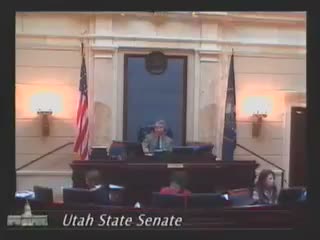
The Utah Senate voted to advance Senate Bill 81, an immigration enforcement and verification package, after extended floor debate that lasted several hours and included a failed effort to delay the law’s effective date.
Senator Daniel Hickman, sponsor of SB81, urged the chamber to act now, saying the state cannot wait for federal action to address what he described as mounting local problems. “The people of the state, based on the latest polling, are overwhelmingly, concerned about this issue and want action taken,” Hickman said during his summation.
The chamber first considered Amendment No. 2 offered by Senator Jenkins to delay the bill’s effective date by one year (to July 1, 2009) to allow a newly proposed task force time to study implementation and consequences. Jenkins said the delay was intended to give the task force a better chance to work and to avoid passing a sweeping measure with limited study. “My purpose is simply to allow the task force to work for a year,” Jenkins said.
Senator Hickman opposed the delay, arguing agencies need time now to prepare and that the bill should take effect as written. After a roll-call on the amendment, the motion to delay failed (recorded in the floor minutes as 12 yes, 15 no, 2 absent).
Floor debate covered multiple operational and policy details. Senators pressed the sponsor about the E-Verify employment-verification system, which the sponsor said is free for employers to use and has “fairly high” accuracy but not perfect. “It is the best system to date that we have available,” Hickman told colleagues when asked about accuracy and cost.
Members also raised concerns about how the bill would affect employers, landlords and local law enforcement. Senator Romero said the bill is “too broad sweeping” and warned of unintended effects on families and the labor market, noting her view that a number of provisions had been introduced only weeks earlier and substantially revised on the floor.
Senators debated sections that condition state or locally administered public benefits on verification of lawful presence. Members asked whether conditioning access to benefits like Medicaid, WIC or food stamps might conflict with federal law when benefits are federally funded or administered. Counsel and the sponsor read statutory language onto the record noting the bill’s carve-outs and the requirement that federal-law exemptions remain in place; however several senators requested further counsel review to confirm the practical scope.
Other debated provisions included: landlord liability for knowingly harboring undocumented tenants (possible Class A misdemeanor in some draft language), a private right of action for certain employment situations, and driver’s-license-related verification rules (the sponsor said rules would allow “any other form of documentation that establishes lawful presence … described by rule and acted by the agency or political subdivision”).
Opponents warned about verification errors, potential business impacts in agriculture and other industries that rely on seasonal labor, and the operational burden on sheriffs and local agencies to implement new verification duties. Senator Jones, speaking as a business owner, asked repeatedly about costs and consequences for employers forced to verify employees or face penalties.
After further floor procedure — including a short period where senators moved to circle and later uncircle the bill — the Senate placed SB81 on the third-reading calendar. A final roll call recorded the measure as carried by the Senate (journal record shows 21 yes, 8 no, 0 absent) and the bill was read for a third time and advanced for enrollment and transmission appropriate to the legislative process.
What happens next: The Senate record indicates SB81 will be enrolled and transmitted per the usual legislative steps; several senators asked that counsel clarify narrow technical points (benefits administration, landlord and employer definitions) in follow-up work. The floor debate left several factual questions flagged for additional legal review and possible amendment in future sessions or conference with the House.
Votes and procedural notes: The motion to delay (Amendment No. 2 under Senator Jenkins’ name) failed on a privileged roll call (recorded as 12 yes, 15 no, 2 absent). The subsequent third-reading roll call on SB81 carried the bill (journal entry: 21 yes, 8 no, 0 absent).