Get Full Government Meeting Transcripts, Videos, & Alerts Forever!
Get email alerts on the School Funding Equalization topic
No spam. Unsubscribe anytime.
Senate advances bill to equalize school capital-outlay funding; Salt Lake County delegates warn of tax shifts
Summary
After extended debate, the Utah Senate moved second substitute Senate Bill 48 to third reading (18–11). The bill pairs a $28.7 million income-tax infusion with a small pooled property‑tax share in Salt Lake County to equalize capital outlay, prompting concerns from Salt Lake‑area senators about long-term property‑tax burdens.
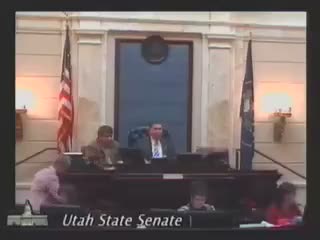
The Utah Senate voted to advance second substitute Senate Bill 48, an equalization plan for school capital outlay funding, after lengthy debate on Feb. 12. The second-step tally was 18 yes, 11 no; the measure will be read for the third time.
Senator Mark Eastman (sponsor) described three components of the bill: a $28,700,000 statewide infusion from the education/foundation fund directed at capital outlay via existing programs; a pooled property-tax fraction (0.0006 of the capital-outlay levy) applied within counties of the first class (Salt Lake County) and split 25% on enrollment growth and 75% on total enrollment; and a requirement that property‑tax equalization accompany future district splits in counties not of the first class.
Supporters argued the bill is a pragmatic regional step toward broader equalization. Senator Stevenson called it an imperfect but necessary 'start' and urged colleagues to adopt a statesmanlike posture to address statewide school‑building needs. Senator Niederhauser and others said regional (county-level) equalization could serve as a workable model.
Opponents, largely representing Salt Lake-area districts, said the bill shifts ongoing property-tax burdens to constituents who did not cause the Jordan School District split. Senator Butters called it 'robbing Peter to pay Paul' and warned that districts such as Murray and Granite would lose millions annually, forcing potential tax increases locally. Several senators urged a statewide approach or infusion of one-time funds instead of an ongoing property-tax reallocation.
Senator Eastman responded that the measure uses existing capital outlay programs rather than creating new mechanisms, and that districts receiving extra state allocations would see their certified property-tax rate reduced, with an option to recapture revenue through truth-in-taxation hearings (debt-service portions excluded). He described the changes as a way to equalize capacity to build and renovate school facilities across the state.
The Senate completed a call of the chamber to secure a quorum, lifted the call, and recorded explanations of vote. The bill will proceed to third reading the next legislative day on the calendar.
What’s next: SB48 will be read for the third time and could receive a final floor vote in a subsequent session; committees and the House may further amend or substitute the measure.