Get Full Government Meeting Transcripts, Videos, & Alerts Forever!
Get email alerts on the Animal Cruelty topic
No spam. Unsubscribe anytime.
Utah Senate passes amended animal cruelty bill after lengthy floor fight
Summary
After several hours of debate and a failed amendment, the Utah Senate passed Senate Bill 117, restructuring animal-cruelty law to create separate tiers for neglect, cruelty and torture and imposing a felony enhancement on repeat offenders; the measure passed 15-14 and was sent to the House.
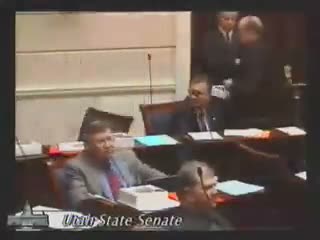
The Utah Senate on Feb. 14 passed Senate Bill 117, an animal-cruelty measure that creates separate statutory tiers for neglect, cruelty and torture and adds enhanced felony penalties for repeat offenders. The bill, sponsored by Senator Curtis Christiansen, passed on a narrow 15-14 roll call and was transmitted to the House for consideration.
Supporters said the bill is a compromise to clarify existing law and strengthen penalties for serious animal torture. "This bill will actually give Utah one of the strongest [positions]," Senator Christiansen said on the floor while outlining the bill's tiered structure and penalty enhancements. He said the measure includes livestock and removes conflicting provisions related to hazing.
Opponents objected to parts of the draft, particularly the handling of neglect and the timing of felony enhancements. Senator McCoy raised concerns that the bill appears to reduce penalties for neglect by reclassifying it to a lower misdemeanor level, saying he could not support the measure as written. "The first reason is because we're taking animal neglect and reducing its penalty, which I just can't accept," McCoy said during debate.
A point of contention was an unsuccessful floor amendment that would have removed the phrase "within 5 years" from the enhancement provision and thereby made any second conviction a third-degree felony regardless of timing. Senator McCoy offered the amendment, arguing second offenses should carry the higher penalty without a five-year window; the motion to delete "within 5 years" failed on a voice vote.
Senator Jason Romero, speaking in favor of retaining the statutory discretion, said the second-offense enhancement is likely not the second time an offender has tortured an animal and noted the bill allows prosecutors to evaluate the facts before seeking elevation of the charge: "I just think that having an offense or torture of an animal on a second offense is really most likely not the second time that torturing an animal has occurred," Romero said.
Other senators warned of unintended consequences if penalties were raised too far. Senator Scott Jenkins said he worried about young people who make mistakes and cautioned against elevating every act to a felony. Senator Hilliard and others pointed to the practical differences in prosecution that occur when matters move from city misdemeanor dockets to felony-level county prosecution.
Senator Davis offered a substitute approach intended to bridge competing bills earlier in the session; that motion to substitute was called for a roll call and failed. After extended debate and several procedural motions, President Valentine announced the bill had passed with 15 yes votes and 14 no votes. The Senate recorded the bill as passed and sent it to the House for its further action.
The legislative record shows a sustained floor debate over striking the right balance between stronger penalties for animal torture and preserving proportionate sentencing and prosecutorial discretion. The House will now receive SB117 for its consideration.