Get Full Government Meeting Transcripts, Videos, & Alerts Forever!
Get email alerts on the Education Funding topic
No spam. Unsubscribe anytime.
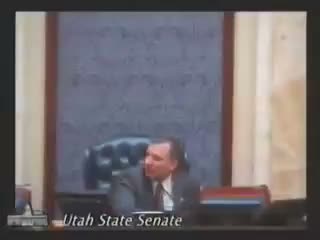
Senate approves school capital outlay equalization plan after lengthy debate
Summary
The Utah Senate passed third substitute Senate Bill 48 on Feb. 13, 2008, advancing a plan to equalize school capital outlay funding in Salt Lake County and beyond; sponsors said the measure uses an allocation formula and truth‑in‑taxation safeguards, while opponents warned of local tax changes.
The Utah Senate passed third substitute Senate Bill 48 on Feb. 13, 2008, sending the equalization plan to the House after a protracted floor debate that centered on property‑tax mechanics and local control.
Senator Eastman, the bill’s floor sponsor, said the measure was intended to equalize capital outlay funding while preserving local oversight. He told colleagues that, contrary to a handout circulated by local school officials, the change “is not a one‑year windfall” and that for a $250,000 home in Salt Lake County the proposal would change property‑tax liability by roughly “$40 a year to $75 a year” in the examples he cited. Eastman and other supporters said technical corrections in the third substitute clarified timing and coordination so the state contribution would be ongoing rather than a single, transitory payment.
Opponents, while not uniformly against equalization, pressed for clearer fiscal mechanics. Senator Bell and others sought detail on why districts would be asked to reduce their certified tax rates in the first year and how a district could then, through truth‑in‑taxation, seek to pull revenue back in subsequent years. Eastman replied that the initial certified‑rate reduction was a policy decision designed to create an immediate property‑tax decrease and to preserve local control: districts receiving funds could use the money for debt service (which would not trigger truth‑in‑taxation) or hold hearings to adjust rates if they wished to retain funds for other uses.
Supporters framed the bill as a step toward broader state equalization. Senator Walker, who represents a historically donor district, said he accepted the measure as a practical move and praised Eastman’s leadership. Several senators who spoke in favor described SB48 as a compromise that would redistribute capital resources to districts with greater need while maintaining local decision‑making on tax questions.
The final roll call recorded 19 yes votes, 9 no votes and 1 absence; President Valentine announced that the bill would be referred to the House for further action. Floor debate included repeated requests for clarity on spreadsheet figures distributed by interest groups; the sponsor pointed to technical changes in the third substitute that he said addressed those concerns. The session adjourned at the end of the calendar with several new bills introduced for first reading.
The Senate’s action advances the capital‑outlay equalization proposal to the House. Next steps will include any House consideration and, if enacted, local school boards confronting truth‑in‑taxation decisions tied to how they choose to use and match the new funding.