Get Full Government Meeting Transcripts, Videos, & Alerts Forever!
Get email alerts on the Family Law topic
No spam. Unsubscribe anytime.
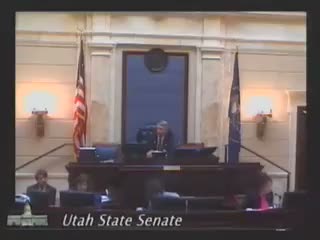
Senate delays final action on parent-time schedule changes after objections over drafting details
Summary
Senators debated House Bill 71’s revisions to parent-time scheduling (holidays, summer division, added fall break and Veterans Day). Concerns over definitions such as 'surrogate care' and a 6 p.m. pickup requirement led sponsors to agree to 'circle' the bill for further off-floor negotiation.
Senator Bell presented House Bill 71, a bill that standardizes parent-time schedules by adding a fall break, Veterans Day and adjusting holiday and summer allocations. He described the bill as the product of judiciary and family-law working groups and said it extends services and clarifies scheduling for high-conflict cases.
Senator Hilliard raised detailed drafting concerns, focusing on the bill’s definition of "surrogate care" (page 3, line 72) and operational issues such as the requirement that a designee be "with the child by 6 p.m." when schools dismiss earlier. Hilliard pressed whether the bill unintentionally excludes grandparents, stepparents or other caregivers from being treated as surrogate caretakers and questioned how the 6 p.m. rule would work for parents who work out of town.
Senator Bell and other supporters said the intent was to liberalize access for noncustodial parents while drawing a clear line to protect school security and identity verification; they also indicated the provision is optional and that parents retain the underlying right to parent time even if they do not use the pickup/designee option.
Because of the outstanding drafting questions on surrogate care and the pickup-time language, Senator Bell agreed to circle the bill so sponsors and interested senators could resolve those details off the floor rather than extend debate on the floor. The Senate carried the motion to circle by voice vote.
The exchange recorded substantive technical concerns about implementation and a commitment to reconcile them in committee or off-floor discussions before third-reading action.