Get Full Government Meeting Transcripts, Videos, & Alerts Forever!
Get email alerts on the Criminal Justice Gang Policy topic
No spam. Unsubscribe anytime.
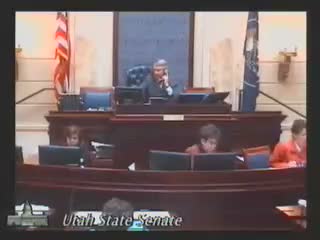
Utah Senate passes narrow gang‑loitering misdemeanor after heated debate on civil‑liberties
Summary
Senators approved legislation creating a notice‑and‑vacate misdemeanor tied to identified gang members who return to designated areas within eight hours; proponents argued it targets dangerous actors, while opponents warned it criminalizes status and risks constitutional challenge.
The Utah State Senate passed a measure on Feb. 6, 2008, aimed at curbing criminal street‑gang activity by authorizing local law enforcement to designate areas and require identified gang members to leave. Sponsor Senator Griner said the intent is narrow: target those with known gang affiliations who have engaged in criminal conduct and provide a tool for local authorities to reduce intimidation and harm in public spaces.
Senator Griner, presenting the bill, framed it as a response to local incidents and national precedent: 'If they return within 8 hours, they are subject to a misdemeanor.' The sponsor said the measure was crafted to avoid sweeping bans on assembly and instead focus on persons who have been identified by law enforcement as gang members and who have been involved in criminal activity.
Opponents pressed constitutional concerns throughout floor debate. Senator Bell argued the bill risks creating a 'crime of status' rather than a crime based on action: 'We've typically not created crimes of status ... to be something is problematic.' Senator Romero said he could not support the measure because the sponsor had not sufficiently addressed those constitutional concerns and recorded that being 'subject to arrest is a little more than an inconvenience simply because of who you may be associating with.'
Sponsor and supporters responded that the bill is narrowly defined, pointed to out‑of‑state drafting efforts following Morales v. Chicago (a Supreme Court decision referenced in floor debate), and highlighted local public‑safety incidents they say the bill could help prevent.
After extended debate and recorded explanations of votes, the clerk announced the bill passed the Senate with 16 yes votes and 10 nay votes, with 3 senators absent. The bill will now be transmitted to the House for its consideration.
What was debated - Scope: Sponsors said the measure applies only to identified gang members in designated areas and aims to remove the most intimidating actors from public spaces. Critics said the statute could penalize association and was vulnerable to constitutional challenge. - Legal precedent: Debate referenced Morales v. Chicago as a limiting Supreme Court decision that influenced how states have recrafted loitering/anti‑gang provisions. - Enforcement mechanics: Sponsor described a notice to vacate, with return within eight hours creating misdemeanor exposure; critics said identification and enforcement criteria must be precise to avoid overbreadth.
Key floor excerpts - Sponsor: 'If they return within 8 hours, they are subject to a misdemeanor.' (Sen. Griner) - Opponent: 'This is a difficult thing because we have typically not created crimes of status.' (Sen. Bell) - Explanation of vote: 'I don't believe that the sponsor has addressed the constitutional concerns ... being subject to arrest is a little more than an inconvenience simply because of who you may be associating with.' (Sen. Romero)
What happens next: The bill is referred to the House for further action. Given the constitutional issues raised on the floor, legal counsel and committee review in the House (and potential court scrutiny after enactment) are likely next steps.
Sources: Floor debate and roll‑call announcements on Feb. 6, 2008.