Get Full Government Meeting Transcripts, Videos, & Alerts Forever!
Get email alerts on the Legislative Process topic
No spam. Unsubscribe anytime.
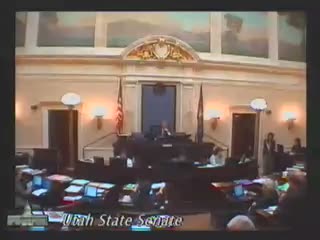
Senate approves trial rule allowing limited electronic participation in interim committee meetings
Summary
The Utah Senate on Feb. 8 approved a substituted resolution allowing limited electronic attendance at interim and special legislative committee meetings under conditions (50‑mile minimum distance, three‑day notice, anchor location, presiding officer approval, max two remote members); the measure passed on third reading after extended debate.
The Utah Senate approved substitute Senate Joint Resolution 7 on Feb. 8, creating a limited, trial framework for electronic participation in interim and certain special legislative committee meetings. Sponsors said the measure is intended as a narrow accommodation to allow members who are more than 50 miles from the meeting site to participate when they cannot attend in person.
Proponents said the rule addresses practical barriers for citizen‑legislators who travel long distances for brief informational meetings. “If you’re not there at all, the level of participation is 0,” Senator McCoy said, arguing that remote participation is preferable to no participation in rare circumstances when a member cannot be present. Senator Stevenson urged the body to “move into the 21st century,” describing the change as appropriate for preliminary interim work.
Opponents cautioned about diminished engagement and technological limitations. Senator Walker said remote participation risks lower engagement and difficulty with back‑and‑forth exchanges, and Senator Romero said some meetings include presentations or visual materials that are difficult to accommodate without video. Senator Bell urged stricter technical standards, saying the resolution should ensure a continuous voice connection and interactivity so remote members can participate effectively.
Under the adopted substitute, a member may attend electronically only if the request is made at least three days in advance, the member will be at least 50 miles from the meeting on the day in question, an anchor remote location is posted for public notice, the committee chair recommends it and the presiding officer (the Speaker or the Senate President) approves it. The rule limits remote participation to no more than two members so a committee cannot convene with a remote majority. Sponsors said the pilot is narrowly tailored to interim and special committees and is not intended for regular session floor action.
After extended debate and several clarifying exchanges, the Senate read the substitute for a third time and recorded a roll call: substitute SJR 7 passed with 24 yes votes, 2 nay votes, and 3 absences. Supporters said the trial will show whether the safeguards produce effective remote engagement or need refinement.
The resolution takes effect as an internal Senate‑adopted rule for interim and special committee meetings; implementation details — such as remote site set‑up and notices — will be handled administratively by committee chairs and presiding officers.
The Senate continued its business after the vote and adjourned until the next scheduled floor day.