Get Full Government Meeting Transcripts, Videos, & Alerts Forever!
Get email alerts on the Education Financial Literacy topic
No spam. Unsubscribe anytime.
Senate advances optional K–12 'financial literacy passport' with small implementation appropriation
Summary
Senator Jones introduced S.B. 61 to create an optional K–12 financial literacy 'passport' tracking mastery of budgeting, banking, credit, taxes and related skills. Sponsor said the bill includes a fiscal note of $100,000 ongoing and $150,000 one‑time; the Senate advanced the bill for third reading after sponsor remarks.
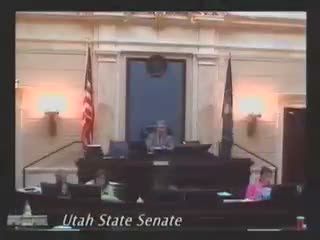
Senator Jones, sponsor of S.B. 61, told the Senate the bill creates an optional financial literacy passport that students could follow from kindergarten through grade 12 and that the State Board of Education would coordinate creation of curriculum, assessments and staff development in partnership with private and nonprofit groups. "This passport is optional and over the next year...we wanted to put some groups together that will collaborate with interested private entities to provide incentives," Jones said, describing parental involvement and hands‑on elements such as taking students to banks.
On the floor the sponsor detailed the scope of topics the passport would cover (basic budgeting, saving, investments, banking and financial services, credit, predatory lending, taxes, identity theft, and related topics) and noted the bill includes a fiscal note described on the record as "a fiscal note on this, of $100,000 ongoing and $150,000 1 time money." He said the bill supplements — and does not supplant — existing high‑school financial literacy instruction and was endorsed by several community organizations.
There was no substantive debate after the sponsor's explanation; Senator Jones waived further consideration and a roll call was called on whether S.B. 61 should be read for the third time. The clerk recorded that the bill "will be read for the third time." The bill will now await placement on the third‑reading calendar for final passage.
Next steps: S.B. 61 is advanced to third reading; any technical or drafting amendments would be expected before final passage if raised by members or staff.