Get Full Government Meeting Transcripts, Videos, & Alerts Forever!
Get email alerts on the Public Safety topic
No spam. Unsubscribe anytime.
Senate debate centers on anonymous in-person reports to Driver License Division
Summary
Senators debated SB34, which would permit notarized, in-person reports to the Driver License Division about drivers believed to be unsafe; supporters cited public safety and screening, while opponents raised due-process and agency-discretion concerns.
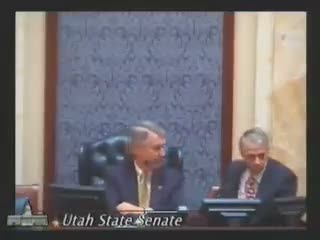
SALT LAKE CITY — A long debate on Senate Bill 34 occupied floor time Jan. 30 as senators weighed a proposal to let members of the public file sworn, notarized reports with the Driver License Division about drivers they believe are incapable of safe driving.
Sponsor presentation: The bill’s sponsor told the Senate the measure is meant to capture cases where citizens are aware a driver poses a safety risk but are reluctant to confront them directly. ‘‘They have to appear. There are safeguards. They have to go down in person, fill out the report, sign it, have that signature notarized,’’ the sponsor said, describing an in-person affidavit that would lead the Division to call a reported driver in for testing if the Division finds merit to the claim.
Supporters argued the process protects public safety while building procedural checks. Senator Griner and others said the Division already evaluates fitness to drive and that a formal, notarized process would be a measured way for concerned citizens to raise issues without fomenting anonymous harassment.
Opposition and concerns: Several senators pressed the sponsor on how the Division will judge intent, good faith and whether the bill delegates prosecutorial discretion improperly. Senator Dayton asked how the law would measure intent to ‘‘annoy, intimidate or harass’’ and whether that would effectively empower the Division to determine guilt for a class C misdemeanor; the sponsor replied the Division has statutory responsibility to assess driving capability and emphasized the test-and-screening step.
Senator Jenkins framed the dispute in constitutional terms, urging caution about anonymous accusations: "I think we have a basic right to face our accusers," he said, and added that the proposal raised fundamental fairness concerns. Other opponents worried the process could be used disproportionately against older drivers or otherwise be subjective.
Outcome and next steps: After extended debate, the chamber recorded a roll-call vote that the clerk announced as 20 yes, 8 no and 1 absent; that tally was recorded for the bill to be read for the third time. Supporters and critics agreed on the need for safeguards; the transcript shows follow-up work for administrative procedures at the Driver License Division would be required if the bill advances further.
Context: Sponsors described the provision as a public-safety measure rather than an age-based test; opponents urged clearer standards for ‘‘good faith’’ reporting and limits on Division discretion. The Senate’s recorded roll call and the sponsor’s pledge to refine procedures mean further committee or administrative work is likely before any final implementation.