Get Full Government Meeting Transcripts, Videos, & Alerts Forever!
Get email alerts on the Education School Calendar topic
No spam. Unsubscribe anytime.
Senate advances bill offering large incentives for districts to adopt extended school-year schedules
Summary
Senate Bill 41, backed by Senator Stevenson, was moved to third reading after debate about implementation logistics, district flexibility and potential costs. The bill creates one-time incentive awards (figures cited during debate) and a state-school-board review process to approve district plans.
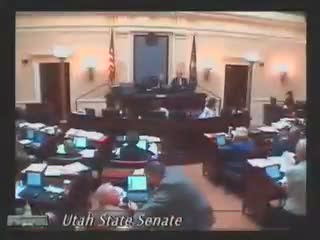
Senate Bill 41, a package measure aimed at encouraging districts to offer year-round teacher contracts and thereby boost teacher pay, was advanced to third reading after the floor adopted Amendment No. 1 to give the State Board of Education discretion over awards.
Sponsor Senator Evan Stevenson described the bill as an incentive program that would allow districts to submit proposals to the state school board for grants to convert to extended-year calendar options. ‘‘This bill is intended to provide an incentive for school districts to make the switch from the nineteenth-century agricultural calendar,’’ Stevenson said, adding that the program aims to increase teacher pay by as much as 40% in participating districts without raising taxes.
Amendment No. 1, passed on the floor, gives the state school board greater flexibility to distribute incentive monies and allows small districts to form consortia to qualify for awards. During debate senators pressed on practical matters: Senator Hickman questioned how students and teacher schedules would be coordinated and expressed concern about building comfort (air conditioning) for summer sessions; the sponsor noted the grant could be used for facilities improvements, citing $20 million for very large districts, $10 million for mid-sized districts and $2 million for small districts as placeholder figures to be refined in appropriations.
Supporters said the pilot approach and local plan review would allow districts to propose family-friendly track schedules and mitigate continuity issues for sequenced courses; critics cautioned about potential bussing burdens, family coordination and the need to preserve programs for students who might opt out of tracks. Proponents emphasized the potential to shrink class sizes and modernize curricula through modular scheduling.
The Senate voted to move SB41 to third reading with 28 yes votes and one absence. Senators indicated further technical and appropriations work would follow before final passage or implementation guidance from the state school board.
Next steps: SB41 returns for third reading and subsequent appropriation discussions where exact award amounts and eligibility criteria will be finalized.