Get Full Government Meeting Transcripts, Videos, & Alerts Forever!
Get email alerts on the Telecommunications Tax topic
No spam. Unsubscribe anytime.
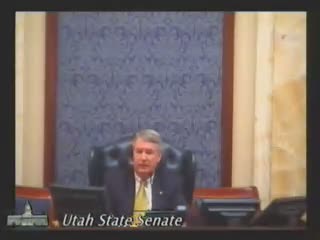
Senate moves multichannel video/audio tax amendment to parity vote; fiscal cost cited at about $5 million
Summary
S.B. 96 would allow cable providers a credit against a state excise tax for franchise fees paid to localities, bringing parity with satellite providers. Senator Niederhauser said the bill levels the playing field; the Senate noted an approximate fiscal impact of $5 million and ordered the bill for third reading.
Senator Niederhauser presented S.B. 96 to address disparities between cable and satellite multichannel-video providers. The bill allows cable providers to deduct the franchise fees they pay local governments from the state excise tax base, aiming to create parity with satellite providers that do not pay local franchise fees.
"This bill allows them to deduct from the excise tax the amount they pay for franchise taxes," Niederhauser said, stressing this is intended as a consumer bill whose savings will be passed through to customers. He told members this measure had been introduced multiple times and that "half of it" had previously been funded.
Senators asked about the fiscal impact and whether the state or municipalities would bear the cost; the sponsor said the fiscal effect was "approximately $5,000,000." Senator Hickman raised a potential conflict-of-interest question, noting individual senators who subscribe to cable could benefit; the chamber clarified that a broadly applied industry effect does not normally require personal conflict disclosure, though Hickman declared his conflict to be cautious.
The Senate ordered S.B. 96 for third reading after a roll-call vote; the tally recorded 28 yes votes and 0 nays with 1 absent. The bill will go to the House if it passes final Senate action.