Get Full Government Meeting Transcripts, Videos, & Alerts Forever!
Get email alerts on the Civic Commemoration topic
No spam. Unsubscribe anytime.
MLK Commission presentation: sixth-grader reads winning essay; Bishop John Wester urges peaceful resistance
Summary
The Martin Luther King Jr. Human Rights Commission addressed the Senate with an essay by sixth-grader Isaac Fehlner and a keynote from Bishop John Wester stressing nonviolent resistance, moral leadership and lawmakers’ duty to the marginalized.
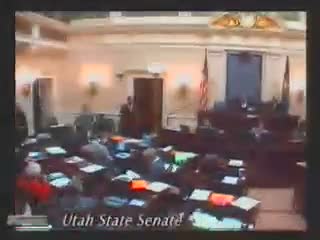
SALT LAKE CITY — As part of a special order for Martin Luther King Jr. Day, the Martin Luther King Jr. Human Rights Commission presented an essay contest winner and a keynote to the Utah State Senate.
Tristan Smith, chair of the commission, introduced Isaac Fehlner, a sixth grader from Vista Elementary and the commission’s essay contest winner. Fehlner read his entry describing dreams for world peace, a cure for hereditary disease affecting his family and his aspiration to become a neurosurgeon to help others.
Bishop John Wester, speaking for the commission, delivered an extended reflection on Dr. Martin Luther King Jr.’s leadership and the moral case for nonviolent resistance. Wester told senators that King’s approach — "the path of peaceful resistance" — combined courage, conviction and an offering of truth and hope to challenge injustice. He urged lawmakers to be "a voice for the defenseless, a support for the marginalized, a beacon of hope for the stranger in our midst."
Several senators thanked the commission and drew connections between King’s legacy and present-day issues. Senator Curtis S. Stevenson cited King’s "Letter from Birmingham Jail," discussed the influences of Thoreau and Gandhi, and raised immigration as an unresolved national policy problem that needs congressional action.
The Commission’s presentation concluded when the Senate dissolved the Committee of the Whole and returned to regular order to continue organizational business.
The Commission also highlighted a statewide Adopt a School program it runs in elementary grades to promote diversity and respect; senators noted the program’s presence in multiple districts.