Get Full Government Meeting Transcripts, Videos, & Alerts Forever!
Get email alerts on the Public Health topic
No spam. Unsubscribe anytime.
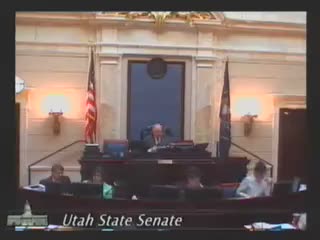
Utah Senate approves ban on smoking in vehicles with children under 5 after heated debate
Summary
The Utah Senate passed SB 14, making smoking in a motor vehicle with a child five or younger a secondary offense. Supporters cited child health and law‑enforcement assurances; opponents warned about enforceability and parental privacy. The measure moves to the House after an 18–10 roll call.
The Utah Senate on third reading approved Senate Bill 14, a measure that would make smoking in a motor vehicle with a child five years old or younger a secondary offense, advancing the bill to the House of Representatives.
Senator McCoy, the bill sponsor, told colleagues he had checked with the Utah Highway Patrol and other law‑enforcement organizations and that leaders there had no enforcement concerns because the offense is secondary. "It's a secondary offense," McCoy said, arguing officers routinely make judgment calls and that protecting young children from secondhand smoke outweighs privacy concerns.
Opponents pressed that enforcement would be difficult because officers could not reliably determine a child's exact age at a traffic stop. Senator Greiner, a former police chief, said she was "a little heart‑squeamish" about asking officers to make age determinations during routine stops and warned about the administrative burden on drivers who would need to prove a child’s age to contest a ticket.
Senator Stevenson described the law as a boundary question about when government should intervene in how parents raise their children and said he would oppose the measure because he could not identify a clear bright line for intervention. Senator Jones, speaking in support, compared the proposal to existing safety laws and said even a secondary enforcement mechanism could prompt safer behavior: "If this makes a smoker just even think for a second" about the risk to children, Jones said, "I think it's well worth it."
Senator Van Tassel explained his decision to vote yes while expressing skepticism about how often the law would be enforced, saying the bill may exist more as a deterrent than a frequently used citation.
On the roll call the Senate recorded 18 yes votes, 10 no votes and one absence; the President announced the bill will be referred to the House for further action.
The Senate debate centered on child health and the practicality of enforcement. Proponents emphasized known harms from secondhand smoke for young children and said law‑enforcement partners had indicated comfort enforcing a secondary offense. Critics cautioned that the provision could create ambiguous enforcement situations for officers and introduce new intrusion into parental decision‑making.
The next step for SB 14 is consideration by the Utah House of Representatives.