Get Full Government Meeting Transcripts, Videos, & Alerts Forever!
Get email alerts on the Criminal Justice Innocence topic
No spam. Unsubscribe anytime.
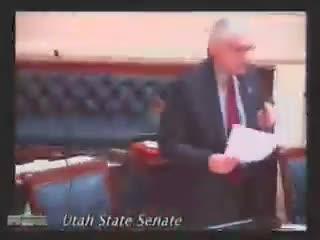
Senate advances bill to compensate people found factually innocent, tying awards to average wages
Summary
Senate Bill 16, sponsored by Senator Bell, would create a standardized compensation scheme for people found factually innocent and direct awards from the Crime Victims Reparation Fund; senators debated proof standards, fiscal mechanics and eligibility before advancing the bill to third reading (27–0–2).
Senator Curt Bell introduced Senate Bill 16, a bill to establish a compensatory framework for people found "factually innocent," and asked the Senate to read the bill for a third time. The bill would treat a factual exoneration as though the conviction never occurred and provide standardized payments tied to the state's average annual wage for each year spent incarcerated, with additional provisions for time spent on death row.
Supporters said the bill is modeled on recent DNA-exoneration efforts and is intended to provide consistent, modest relief while reducing litigation. "This is an exciting bill," the sponsor said, describing a system that avoids lottery-style awards and instead provides an annually calculated stream of payments. The sponsor cited an average annual wage figure the bill uses in calculating awards (the sponsor referenced roughly $35,000–$40,000). The sponsor and other senators described the measure as sparingly used and subject to a high burden of proof: a petitioner must establish factual innocence by clear and convincing evidence.
Senators questioned funding and scope. Senator McCoy said the Crime Victims Reparation Fund balance was "just under $10,000,000," and the sponsor explained awards would be paid from that fund and that the Legislature would appropriate non-lapsing general-fund amounts in the session following any award to keep the fund whole. During floor discussion members cited small administrative fiscal notes; the transcript contains inconsistent figures cited in debate (the sponsor referenced a small fiscal note and later used a differing administrative figure), which the sponsor characterized as limited administrative cost compared with potential award payouts. The sponsor stressed that claimants must satisfy procedural requirements and a high evidentiary standard for an award.
Senators also asked whether noncitizen petitioners could qualify. The sponsor said people lawfully present (for example, green-card holders, visa holders or students lawfully in the country) could petition; people who are unlawfully present would not qualify. Several senators urged careful review on third reading of proof standards and retroactivity.
After discussion, the Senate voted to read Senate Bill 16 for the third time; the clerk announced 27 yes votes and 0 nays with 2 absent. The bill will return for final debate and a third-reading vote.
The Crime Victims Reparation Office and the bill text would set the claim procedure and standards; the floor record makes clear questions about administrative costs and exact award mechanics remain to be resolved on third reading.