Get Full Government Meeting Transcripts, Videos, & Alerts Forever!
Get email alerts on the Criminal Justice topic
No spam. Unsubscribe anytime.
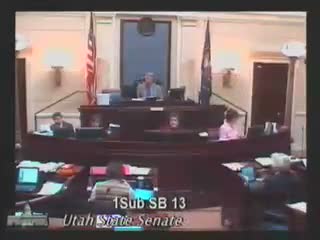
Senate approves limited compensation system for Utah exonerees
Summary
The Utah Senate passed SB16 establishing a no‑fault compensation mechanism for people exonerated of crimes, capping recoverable years and setting a high civil standard for petitions; senators debated limits and whether the payment bars other claims for prosecutorial misconduct.
The Utah Senate passed Senate Bill 16 on January 23, 2008, creating a civil compensation route for people who are exonerated of criminal convictions. Sponsor Senator Bell said the measure is a ‘‘no‑fault’’ system intended to provide predictable, modest compensation while protecting the state’s fiscal exposure. The bill passed the Senate by roll call 23–1 with five senators absent and will be transmitted to the House.
Senator Bell and supporters described the program as modeled on workers’ compensation: payments are tied to years incarcerated up to a statutory cap and are designed to be partly paid as an annuity to avoid a single large lump sum. As the sponsor explained on the floor, ‘‘if you did 15 years it would be 15 times $35,000 would be roughly $500,000 and 80% of that would be payable as an annuity.’’ The sponsor and proponents said the approach makes awards predictable and reduces pressure on the Crime Victims Reparations Fund.
The measure sets a maximum recoverable period (discussed on the floor as 15 years) and ties awards to a civil petition process that requires proof by a clear‑and‑convincing standard. The bill text, read and discussed on the floor, also states that ‘‘payments pursuant to this part constitute a full and conclusive resolution of the petitioners' claims on the specific issue of factual innocence.’’ Sponsors clarified that the statute resolves claims based specifically on factual innocence but does not necessarily bar separate suits for deliberate prosecutorial misconduct; senators said egregious misconduct could remain actionable.
Debate focused on the policy tradeoffs: several senators expressed sympathy for exonerees and concern about adequate redress, while others emphasized fiscal restraint and the importance of predictable benefit levels. Senator Maine and others asked whether the cap left victims undercompensated; sponsors replied the cap and annuity structure balance fairness and sustainability.
Next steps: SB16, as amended and passed by the Senate, will be considered in the Utah House of Representatives. The Senate record shows one negative vote and recorded concerns from at least one senator who sought to protect other civil remedies in cases of prosecutorial misconduct.