Get Full Government Meeting Transcripts, Videos, & Alerts Forever!
Get email alerts on the 2009 Legislative Session topic
No spam. Unsubscribe anytime.
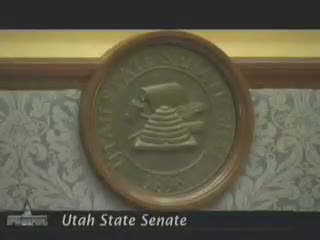
Utah Senate finishes 2009 session: bills on health care, public lands, victim rights and Sudan divestment pass before Sine Die
Summary
The Utah State Senate completed its 2009 general session on March 12, concurring with numerous House amendments and passing measures on public lands policy, victim-rights remedies, health-insurance rules and a state procurement restriction tied to Sudan. Lawmakers closed the session after brief debate on remaining bills and remarks from the governor.
SALT LAKE CITY — The Utah State Senate completed its 2009 general session on March 12, sending a flurry of bills back to the House for signatures and adjourning Sine Die after a day of final votes, committee reports and valedictory remarks from the governor.
Lawmakers moved quickly through the concurrence calendar and second-reading items, adopting conference reports and concurring with House amendments on dozens of measures. The Senate adopted a conference committee report to fix a drafting error in House Bill 378 (circuit breaker amendments), changing a $60,000 provision from "ongoing" to "one-time" and approving the report without debate. House Bill 378 passed the Senate by recorded vote: 27 yea, 0 nay, 2 absent.
The chamber approved bills affecting a range of policy areas. Among the measures enacted:
- HB 148 (Victim Rights Amendment): Sponsor Sen. Kevin Knudson presented a fourth substitute to correct a technical defect in the crime-victim statutes and to empower trial judges to award remedies that let victims assert their rights (excluding new trials or monetary damages). The Senate forced the substitute under suspension and passed the bill (21 yea, 0 nay). Knudson said the change "permits the victim to assert the right" while preserving protections for defendants and limiting remedies consistent with double jeopardy concerns.
- HB 169 (Public Lands Policy Coordination): Senator Stoll said audit findings prompted reorganization of the state office and the dissolution of the public lands policy coordinating council, strengthening the role of a constitutional defense council and clarifying duties of the state planning coordinator. The third substitute passed on the floor (25 yea, 0 nay, 4 absent).
- HB 178 (Health insurance and program amendments): Senator Lillienquist described changes to Children’s Health Insurance Program procurement — requiring bidders to make at least two networks available — and authorizing the state to apply federal ARRA COBRA subsidy provisions to small-employer "mini-COBRA" plans. The bill passed unanimously (29 yea, 0 nay).
- HB 404 (Disclosure of real property): Senator Butters explained the bill requires owners or leaseholders who have actual knowledge of contamination to disclose it and clarifies liability for real-estate professionals; the bill authorizes civil suits for failure to disclose and establishes cleanup standards. The measure passed by roll call.
- HB 164 (Migratory bird protection areas): After replacing earlier language that raised eminent-domain concerns, the third substitute directed protections for historic duck clubs and similar areas and passed the Senate (27 yea, 0 nay, 2 absent). Senator Dayton said the change removes imminent-domain language and preserves habitat-protection practices.
- HB 436 / HB 4 36 (State prohibition on Sudan-related contracts): Senator Robles brought a bill aligning state procurement rules with the federal Sudan Accountability and Divestment Act of 2007. Debate focused on whether divestment and procurement restrictions pressure governments or inadvertently harm local populations; supporters pointed to international pressure and prior state divestment precedents. The Senate passed the bill (24 yea, 5 nay).
- SB 272 (Driver license sanctions and DUI-related penalties): Senator Jenkins described negotiated changes agreed with the governor’s office; the second substitute adjusted license-suspension and interlock-device requirements (120 days for one specified penalty and an 18-month interlock in the negotiated text for some offenders) and clarified under-21 rules. The Senate concurred and passed the second substitute (27 yea, 0 nay).
Votes on other bills — including measures on film incentives (SB 14), reuse of industrial byproducts for road construction (SB 224), sales and use tax formula corrections (SB 189), education assessment changes (HB 334), and a series of technical or sector-specific amendments — were handled largely under suspension of the rules with roll-call tallies read into the record. Where sponsors offered brief floor summaries, senators moved quickly to roll-call votes.
Procedural notes and fiscal context
During debate on a House joint resolution about PEHP premium sharing (HJR 29), lawmakers discussed a cap on a projected 9% cost increase. Sponsor Sen. Lilienquist said the instruction to PEHP was intended to hold employer/employee premium shares steady while staff manage deductibles and office-visit costs; the sponsor described a $17,000,000 increase scenario that the resolution aims to avoid and characterized the measure as cost-avoidance (no fiscal appropriation on the fiscal note). The resolution passed (18 yea, 2 nay, 9 absent).
Closing, acknowledgements and adjournment
After completing votes and signing directions to enrolling staff, Senate and House delegations formally reported to each other that they had completed business. The governor addressed the chamber and lauded what he called an unusually collaborative year: "So you did a great job," he told senators, and later closed by saying, "May God bless the great state of Utah." (Governor Huntsman — referenced earlier in debate — addressed the chamber but the transcript records him only as the governor speaking.)
Senators gave extended thanks to legislative staff, fiscal analysts, the auditor general’s office, legal counsel, pages and interns. A group of interns delivered a light-hearted tribute before the chamber resolved into Committee of the Whole to hear them. Finally, a motion to adjourn Sine Die carried and the Senate adjourned for the 2009 general session.
What happens next
Bills that passed the Senate with the House concurrence were returned to the House for the Speaker's signature and then sent to the enrolling staff for final processing per regular legislative procedure. Where the Senate adopted conference reports or concurred in House amendments, those measures were sent for enrollment and signature by the President in open session.
Reporting note
This account is based only on the Senate floor transcript for March 12, 2009. Quotations are drawn from the on-record floor remarks included in that transcript and attributions follow how speakers identified themselves in the record.