Get Full Government Meeting Transcripts, Videos, & Alerts Forever!
Get email alerts on the Death Certificate Procedures topic
No spam. Unsubscribe anytime.
Senate approves bill letting families fill limited death-certificate fields amid safety concerns
Summary
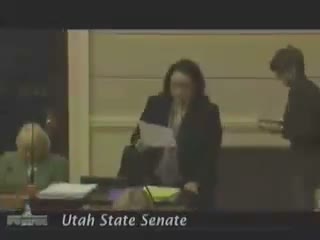
The Utah Senate passed House Bill 265 to allow families to designate a 'dispositioner' to complete the statistical portion of a death certificate; opponents raised public-safety and 24-hour disposition concerns but the Senate approved the measure 22–6 (final concurrence to the House pending).
The Utah Senate on Monday passed House Bill 265, which allows a family member or other designated person — called a "dispositioner" in the bill — to complete the statistical portion of a decedent's death certificate while leaving medical certification of cause of death unchanged. Sponsor Senator Robles said the change responds to requests from Native American communities and removes a middleman expense by permitting families to supply routine demographic information rather than requiring a funeral director to do so.
"We are just asking to allow a family or next of kin to act as a dispositioner," Senator Robles said, adding that "there are laws in place on how to dispose of a dead body. ... The only thing that changes is that the family can change the other part of that death certificate, which is statistical information." (Sponsor: Senator Robles)
Opponents urged caution. Senator Greiner said the bill would give "any public citizen the right to sign off on a death certificate" and raised practical and public-safety questions about the state's 24-hour requirement for disposition and the handling of autopsied bodies. "There's OSHA requirements that are coming to play with body fluids ... I think that this is a bill that probably needs more study in interim," Greiner said. (Opponent: Senator Greiner)
Senators debated whether current procedures already allow some release and transfer of remains and whether the bill would change the requirements for medical certification. Senator Jenkins asked whether a body could be released and buried within 24 hours if a death certificate were signed; senators who supported the bill answered that existing law allows controlled releases and that the bill does not alter who certifies cause of death. Supporters emphasized that the bill does not change the requirement that "an attending physician or a medical examiner certify" the cause of death.
Senators also discussed cultural considerations. "This is mostly for Native Americans, and it doesn't change the procedure," a supporter said, urging respect for families' religious and cultural practices.
After debate and a roll-call, the Senate approved HB265 22–6 with one absence. The bill will be returned to the House for further action.
What happens next: The bill returns to the House for concurrence and the Senate-recorded vote was 22 yeas, 6 nays, 1 absent. Any additional amendments or implementation details (for example, forms and county health-department processes) will be handled in the follow-up between sponsors and local health officials.