Get Full Government Meeting Transcripts, Videos, & Alerts Forever!
Get email alerts on the Corrections Education topic
No spam. Unsubscribe anytime.
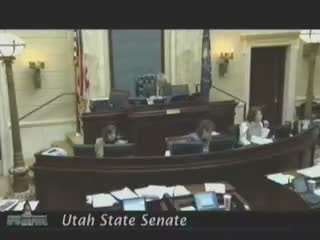
Senate passes bill shifting some prisoner-education funding oversight to corrections; advocates warn of harm to programs
Summary
Second substitute House Bill 100 passed after emotional floor debate. Supporters say the change creates repayment responsibilities and a stable funding stream; opponents argue transferring authority and funds from higher education to corrections risks undermining successful prison-education programs.
Senators debated and passed second substitute House Bill 100, which modifies who manages and is reimbursed for educational and reentry services in state correctional institutions.
Senator Bramble, presenting the bill, described provisions that would require certain offenders to reimburse a portion of the costs for medical, dental and postsecondary education received while incarcerated and direct the Utah Department of Corrections to develop a recidivism-reduction plan jointly with higher education and education boards.
Senator Goodfellow spoke in strong opposition, arguing the bill would “hurt the program” that currently provides training and would transfer control of the fund that has been paying tuition from the Board of Regents to the Department of Corrections. “I think that's wrong. I think it's obscene,” Goodfellow said, criticizing both the surcharge mechanics and the effect on educational opportunities.
Other senators raised concerns about the burden on families and the ability of released individuals to repay tuition obligations; Senator Jenkins described how repayment obligations could hang over families trying to reestablish themselves after release. Senator Dayton supported the bill, saying repayments are reasonable (average repayment totals discussed in committee testimony were described as less than $1,500) and that corrections will contract with local colleges to deliver education under the revised model.
The Senate recorded a roll-call vote; the transcript shows the second substitute of HB100 passed with 19 yea, 8 nay and 2 absent. The bill will be placed at the bottom of the third-reading calendar for further Senate consideration as required by procedure.