Get Full Government Meeting Transcripts, Videos, & Alerts Forever!
Get email alerts on the Public Notice Website topic
No spam. Unsubscribe anytime.
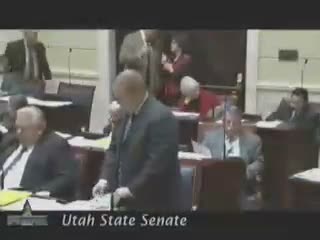
Senate approves bill moving legal notices to state public‑notice website; opponents warn of digital divide
Summary
Senators passed second substitute SB208 to require legal notices be posted on a state public‑notice website (with an exception requiring newspaper publication in smaller counties). Sponsor said the change is searchable, archivable and would save taxpayers; critics raised concerns about seniors and access. Vote: 18 yes, 8 no, 3 absent.
The Utah Senate passed second substitute Senate Bill 208 to move legal‑notice publication from newspapers to a central, searchable state public‑notice website maintained by the State Archives, with a compliance date set for January 2011.
Sponsor remarks emphasized reach and cost savings. "This will save them loads and loads of money while putting notice out on the Internet to anyone who wants it," the sponsor told colleagues, adding that "my city alone pays $36,000 a year" for legal‑notice publication. The bill requires online posting statewide and retains a requirement that counties of the third through sixth classes also publish notices in a local newspaper.
Proponents said the centralized website would be searchable, archivable and allow email/RSS alerts, improving public access compared with a fragmented system of newspaper postings. The fiscal note was described on the floor as revenue neutral, with a small fee to support website development and maintenance.
Opponents urged caution. Senators argued many older residents rely on newspapers and that switching to online‑only notice in larger counties could reduce effective transparency for seniors and others who do not regularly use the Internet. Several senators suggested alternatives, such as requiring both formats in more jurisdictions or addressing newspaper pricing (parity with classifieds) instead of eliminating print publication.
After floor debate and questions from multiple senators, the chamber voted to place the substituted bill on the third‑reading calendar and then recorded final passage to leave it at the bottom of the third‑reading calendar; the roll call recorded 18 yay votes, 8 nay votes and 3 absent. The bill carries a compliance date of January 2011 to give newspapers time to plan for revenue transition.
Next steps include third‑reading formalities and enrollment for transmittal to the House or for final processing depending on its place in the legislative calendar.