Get Full Government Meeting Transcripts, Videos, & Alerts Forever!
Get email alerts on the Local Government topic
No spam. Unsubscribe anytime.
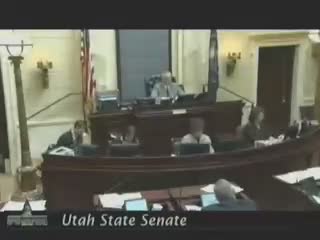
Senate approves amendment limiting taxing authority for police districts, requires city and county votes
Summary
The Senate adopted an amendment to SB131 that sets who must approve local police-district tax increases: a simple majority in each participating city and the county council, or if not unanimous, a two-thirds county-council majority plus city majorities; the amended bill passed unanimously and will move to the House.
The Utah Senate adopted a compromise amendment to legislation that structures taxing authority for interlocal police districts and then passed the bill unanimously.
Senator Bramble offered Amendment #3 (dated 02/24/2009), negotiated among Salt Lake County, the League of Cities and Towns, and affected cities. The amendment establishes a clear threshold for tax increases to fund a police district: if each participating city legislative body and the county council approve a tax increase by a simple majority, the tax may be imposed. If one or more participating cities object, the amendment requires a two-thirds vote of the county council plus a simple majority of the legislative bodies of participating cities to impose the tax.
The amendment also limits the statute’s applicability to counties of the first class, a concession intended to narrow the change to the counties that expect to form these districts.
Sponsor reaction and vote Senator Jenkins (sponsor) described the change as "friendly"; Senator Bramble said he was unaware of any opposition among the affected stakeholders. The Senate adopted the amendment and passed the second substitute, SB131, on a recorded roll call (29 yeas, 0 nays) and referred it to the House.
Why it matters SB131 governs how local governments can organize and fund joint policing arrangements. The amendment clarifies a previously contested point—whether a single city could block a district tax—by providing a two-path approval mechanism designed to protect municipal interests while enabling regional policing options. The limitation to counties of the first class narrows the law’s immediate reach to large counties.