Get Full Government Meeting Transcripts, Videos, & Alerts Forever!
Get email alerts on the Elections Secret Ballot topic
No spam. Unsubscribe anytime.
Senate approves constitutional amendment to enshrine secret ballot for employee representation; critics call process rushed
Summary
The Utah Senate voted to place a constitutional amendment on the November 2010 ballot to clarify that secret‑ballot protections apply to employee representation elections. Supporters said it preserves workers' privacy; opponents called the vote rushed and politically motivated. Final roll call: 21 yes, 8 no.
The Utah Senate voted to place a proposed constitutional amendment on the November 2010 ballot that would clarify that secret‑ballot protections extend to elections to designate or authorize employee representation.
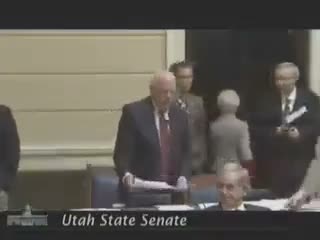
Senator Curt Stevenson, sponsor of House Joint Resolution 8 (first substitute), told colleagues the language is intended to "preserve the status quo regarding secret ballot" and to protect workers if federal legislation were to change current practices. "If you want to preserve the status quo, vote yes," Stevenson said during his summation.
The resolution would add language to Article IV, Section 8 of the Utah Constitution to make explicit that secret ballots apply to elections under state or federal law for public office, initiative or referendum and to "designate or authorize employee representation." Proponents invoked national discussion of "card check" and the Employee Free Choice Act as the reason for the clarification.
Opponents criticized the timing and process. Senator Romero called consideration of the resolution "bad form" and an "abuse of position," saying the House resolution had been in the chamber for less than 24 hours and the Senate had not given members adequate time to review implications. "We should take a little refrain," Romero said, urging that the matter be studied further rather than rushed under suspension of the rules.
Senator Davis argued the proposal was a federal policy fight improperly recast as a state constitutional change, calling the measure "nothing more than a red herring" that would inappropriately use the constitution for political ends. Several senators asked why the Constitutional Revision Commission had not reported a recommendation; the sponsor said the commission had met but not taken a vote.
Senator McCoy and others pressed whether federal law could preempt a state constitutional amendment; proponents said the measure would protect employees not covered by federal law but acknowledged the possibility of federal preemption in some circumstances.
After extended debate, Senator Stevenson moved under suspension of the rules to read the resolution for second and third time and move it for final passage. The Senate divided and recorded 21 yes votes and 8 no votes; the measure passed and will be placed on the 2010 ballot for voters to decide.
The next procedural steps are placement of the resolution on the ballot and any administrative steps required by the lieutenant governor to put the constitutional amendment before voters. The Senate adjourned after completing floor business.