Get Full Government Meeting Transcripts, Videos, & Alerts Forever!
Get email alerts on the Water Policy topic
No spam. Unsubscribe anytime.
Senate approves framework letting public water suppliers allocate water rights for limited rainwater collection after debate
Summary
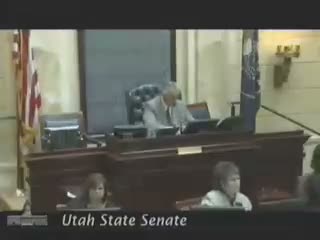
After extended floor debate over water rights and downstream impacts, the Utah Senate passed SB58 to let authorized public water suppliers allocate portions of existing water rights to allow citizens to collect and use precipitation under an approved exchange process; sponsors said safeguards and reporting to the state engineer are required.
The Utah Senate passed legislation to allow public water suppliers to authorize limited private capture and beneficial use of precipitation, advancing a compromise approach intended to protect downstream water rights while giving property owners a path to collect rain and snow.
Senator Mark McCoy, sponsor of SB58, said the bill creates a mechanism for an "authorized public water supplier" to bundle existing water rights and make them available for precipitation capture via an approved exchange application to the state engineer, with annual reporting. "This bill operates within the current system of water rights," McCoy said, arguing it balances property owners’ interest in collecting small amounts of precipitation with the need to protect downstream users.
Opponents raised constitutional and practical concerns. Senator Jenkins said he objected to the idea that government would effectively grant people rights to water that “fell on your roof,” calling the approach an uncomfortable assertion of government control over rainwater. Senator Hinkins warned that Utah’s waters are already over-allocated, saying widespread rooftop collection—even at 2,500 gallons per container—could threaten downstream decreed rights and municipal priorities. "If everyone collected the pure water on their property," Hinkins said, "downstream users would be in trouble."
Sponsor’s safeguards and details McCoy and other supporters said the measure is designed to work inside the prior-appropriation framework: a municipal or public water supplier must own or have an interest in the water rights it offers and must make an application to the state engineer to approve transfers or exchanges. The bill allows public water suppliers to impose reasonable application and reporting requirements and to specify health and safety measures (for example, to avoid mosquito risks from open cisterns).
Several clarifying points recorded in the debate: - The bill contemplates a de‑minimis threshold and practical limits; related discussion referenced 2,500-gallon storage as a standard industry size previously debated in a companion bill (SB128). - The state engineer reviews exchange applications and has the authority to approve or deny transfers based on ownership nexus and downstream impacts. - The bill does not explicitly prohibit charging administrative fees; sponsors said the statute is silent on whether a water supplier may charge for water or administrative costs.
Vote and next steps The roll-call on SB58 recorded the bill’s passage and sent it on for placement on the third-reading calendar. (The transcript records a roll call outcome recorded in the chamber; the sponsor committed that the process would rely on the state engineer to verify the rights being transferred.)
Why it matters Water policy in Utah is tightly bound to prior-appropriation water rights dating back generations. Proponents framed SB58 as a narrowly tailored way to let citizens collect small amounts of precipitation without undermining upstream or downstream adjudicated rights; opponents cautioned that unlocking even modest collection could have cumulative effects on scarce water supplies. The state engineer’s role and municipal participation were central to the compromise that moved the bill forward.
The Senate returned the bill to the calendar for third reading; the bill’s implementation will depend on the exchanges the state engineer approves and on how local water suppliers design application and reporting procedures.