Get Full Government Meeting Transcripts, Videos, & Alerts Forever!
Get email alerts on the Water Rights topic
No spam. Unsubscribe anytime.
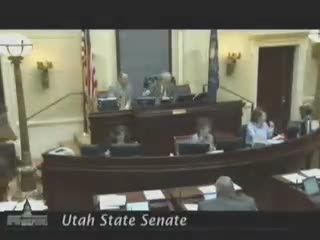
Senate advances House Bill 241 after extended debate over water‑rights language
Summary
Senator Okerlund presented House Bill 241 to repeal a cited section of state code that members said conflicts with prior‑appropriation water doctrine. Senators voiced sharply divided views about repeal, definitions of 'scarcity,' and impacts on municipalities and agricultural users; the bill advanced to third reading.
Senators debated House Bill 241, presented by Senator Okerlund, which would repeal a section of state statute that proponents said contradicts the longstanding prior‑appropriation doctrine for water rights. Okerlund told colleagues the change would preserve "first in time, first in place" priority and that the bill had been studied by an Executive Water Task Force, the State Water Development Commission and Natural Resources committees.
Opponents urged caution. Senator Hejern said he opposed repeal because the cited statutory provision—though rarely used—serves as an emergency safeguard to prioritize domestic use in extreme scarcity and should not be deleted without clearer alternatives. "We never gotten to that point of a scarcity that we really need to do so," he said, adding that homeowners and farm users could be disadvantaged by an untimely repeal.
Supporters, including Senator Stone and Senator Eric Wright, argued the provision is vague, has created uncertainty and bargaining leverage rather than litigation, and that removing it would prompt stakeholders to clarify definitions and planning. "If they realize that this statute is going to disappear, everyone will have genuine interest in clearing up this problem," Stone said.
The debate centered on definitions of "scarcity," risks to historic water rights dating to the 1860s, and the capacity of municipalities to plan for supplies. Okerlund noted the bill's effective date is delayed until May 2010 to allow time for further work on definitions. After extended discussion, the motion to advance the bill succeeded and it was placed on the third‑reading calendar for further action.
Next steps: the bill was advanced to third reading and will return to the Senate floor for a future vote on third reading; senators and committees signaled they would continue work on definitions and potential implementation language during the interim period before the bill's effective date.