Get Full Government Meeting Transcripts, Videos, & Alerts Forever!
Get email alerts on the Medical Malpractice topic
No spam. Unsubscribe anytime.
Utah Senate approves higher proof standard for emergency-room malpractice claims
Summary
The Utah Senate passed Senate Bill 79, raising the standard of proof in certain emergency-room malpractice cases to 'clear and convincing' and adding review authority over out-of-state expert witnesses; supporters say it will protect ER coverage, opponents warn it may limit patient remedies.
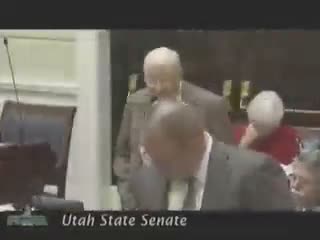
The Utah Senate on the floor session of March 3, 2009, passed Senate Bill 79, a tort-reform measure that raises the standard of proof for medical malpractice claims tied to emergency care and imposes oversight on out-of-state expert witnesses.
Senator Knudson, the sponsor, said the bill narrows the change to emergency care covered under the federal Emergency Medical Treatment and Active Labor Act (EMTALA). He told the Senate the bill changes the standard for those malpractice claims from a preponderance of the evidence to clear and convincing evidence and would grant temporary licensure authority and disciplinary review for experts who travel into Utah to testify. “It does not make providers immune from suit,” Knudson said. “It just means that if someone brings a malpractice suit, they should be slightly more sure than flipping a coin that a mistake has been made.”
Supporters argued the measure will help retain specialists on emergency-room call panels by reducing the threat of suits they described as driven by litigation risk. Senator Dayton said the bill is a “mid-level standard and it’s wholly appropriate for the emergency room,” noting federal EMTALA rules that require emergency departments to accept and stabilize every patient. Senator Lillian Quest, who said she comes from a family of doctors, argued the change recognizes the unique constraints of emergency care and stressed practical pressures faced by on-call specialists.
Opponents countered that the higher proof standard is comparable to fraud litigation and could make it substantially harder for injured patients to prevail. Senator Valentine said the “clear and convincing” standard is the same used to prove fraud and warned it would apply not only to physicians but to hospital staff and equipment claims in an ER setting. Senator McCoy and Senator Hilliard raised concerns that the bill substitutes a partial procedural fix for broader health-care reforms and questioned whether patients would see any reduction in insurance premiums as a result.
The bill also creates a disciplinary avenue for out-of-state expert witnesses who testify in Utah malpractice cases: an expert licensed temporarily to testify would be subject to review by the Medical Licensing Board, the sponsor said. Opponents said that provision could chill expert participation and make it harder for plaintiffs to obtain impartial outside testimony.
After lengthy floor debate, the Senate approved SB 79 in a roll-call vote that the clerk recorded as 16 yeas, 12 nays and 1 absent. The bill was placed on the third-reading calendar for final passage processing.
The sponsor framed the measure as a narrow step toward stabilizing emergency-room coverage; opponents urged broader reform and warned of unintended consequences for patient access to justice.