Get Full Government Meeting Transcripts, Videos, & Alerts Forever!
Get email alerts on the Health Reform topic
No spam. Unsubscribe anytime.
Senate advances health reform package: billing transparency, insurance portal, 'NET CARE' and market options move forward
Summary
Senators advanced several health-reform task-force bills, notably the third substitute of House Bill 165 (billing transparency and a demonstration project) and the second substitute of House Bill 188 (an insurance-market portal, defined-contribution options and NET CARE). Lawmakers emphasized consumer transparency and market-driven options; HB188 was placed on third reading and later tabled on third due to a fiscal note.
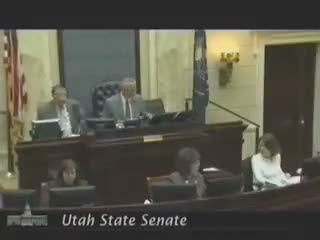
The Utah Senate on March 4 advanced a package of health-care reforms developed by the Legislature’s Health Care Reform Task Force, moving multiple substitutes onto the third-reading calendar.
Senator Bell presented the third substitute of House Bill 165, which aims to improve billing transparency by requiring hospitals to send final billing information after receipt of an insurer’s explanation of benefits so the bill reflects the actual amount a patient owes. Bell said the bill also creates a demonstration project for payment and delivery reforms, standardizes health benefit cards with key data (carrier, network, copay/deductible) and includes a coordination-of-benefits “birthday rule” to determine primary payer when family members have multiple employer plans; the birthday-rule provision will not take effect for 18 months to allow stakeholders to refine it.
Senator Bell and other presenters credited Representative Newbold and Representative Dunnigan (task-force members) for elements of the bills. Key operation dates discussed on the floor include defined-contribution products for small employers beginning Jan. 1, 2010, and large-group participation in the defined-contribution market beginning in 2012, as presented by sponsors.
Senator Bell also presented the second substitute of House Bill 188. Sponsors described HB188 as creating an Internet portal where consumers can compare insurer products and an associated marketplace that allows defined-contribution and defined-benefit choices, guaranteed-issue products, and options such as NET CARE (a lower-cost conversion product for people who leave employer coverage, modeled as a COBRA alternative). The substitute clarifies relationships between PPO reimbursements and mandate-light products and includes reporting and study requirements to monitor provider and insurer impacts.
On roll call, the third substitute of House Bill 165 was read for a third time and recorded as passing (the transcript records it received 25 yea votes, 0 nay, 4 absent). The second substitute of House Bill 188 passed by roll call (the transcript records 23 yea, 0 nay, 6 absent) and was placed on the third-reading calendar; sponsors then moved to table HB188 on third reading because of a fiscal note, and the floor carried that motion to table.
Supporters praised the task force’s stakeholder work; supporters and some skeptics both emphasized the incremental, experimental nature of the package and pledged to monitor unintended consequences, with reporting requirements and summer study commitments noted on the floor. Senators mentioned concerns about noncontracting rural hospitals, surgical-center competition and how second-tier reimbursements would be administered — sponsors said reporting and master-study language would be used to address these issues in follow-up work.
Next steps: the bills were placed on the third-reading calendar (HB165 and HB188) but HB188 was tabled on third because of a fiscal note; implementation and statutory detail will depend on amendments, fiscal review and further floor action.