Get Full Government Meeting Transcripts, Videos, & Alerts Forever!
Get email alerts on the Autism Coverage topic
No spam. Unsubscribe anytime.
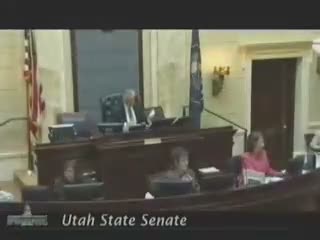
Utah Senate advances "Clay's Law" requiring insurer coverage for autism therapy
Summary
After testimony from two young men and a University of Utah pediatrician, the Utah Senate voted 17–11 (1 absent) to advance Senate Bill 43, which would require certain state‑regulated private insurers to cover evidence‑based autism therapies up to annual caps of $50,000 for children under 9 and $25,000 for ages 9–17.
SALT LAKE CITY — The Utah Senate voted to advance Senate Bill 43, known in testimony as "Clay's Law," after senators heard emotional testimony and expert evidence about the effects of early behavioral therapy for children with autism.
Senate Bill 43 would require health insurance policies regulated by the state to provide benefits for research‑based treatments for autism spectrum disorders, limiting annual benefits to $50,000 for children younger than 9 and $25,000 for children ages 9 through 16; the bill also grants the insurance commissioner authority to adjust those amounts for inflation.
Two young men who described themselves as having recovered after early intensive behavioral treatment spoke directly to senators. "I ask each of you senators to vote yes on senate bill 43 because I believe every kid should have the same chance that I've had," said Clay, an 8‑year‑old who recounted how early treatment enabled him to attend school, play sports and participate in class. Andrew King, who said he had been diagnosed as low‑functioning at age 3, described going from nonverbal to making the honor roll and competing in Science Olympiad, and told the Senate, "If all the kids had applied behavioral analysis treatment...50 of the people who receive treatment would become recovered like Clay and I."
Dr. Paul Carbone, a pediatrician and assistant professor of pediatrics at the University of Utah, summarized peer‑reviewed studies that show intensive early behavioral therapy (commonly described as applied behavioral analysis, ABA) can significantly improve language, cognitive and adaptive outcomes when administered at 25 hours or more per week and individualized to the child. Carbone told senators that many families cannot afford the therapy: "The high price tag is a barrier that puts this therapy painfully out of reach for most families," he said.
Opponents raised concerns that mandating coverage would increase premiums, reduce overall insurance availability and shift costs across families and employers. "If we require insurance companies to pay for this extra mandate...they increase their rates. In other words, the company doesn't pay, we pay," said Senator Christiansen, calling the proposal "an insurance mandate plain and simple." Several senators also pointed to the bill's fiscal note and the current budget shortfall, questioning whether the state should add what some witnesses characterized as new costs to the market at this time.
Debate also covered the bill's scope: sponsors and supporters clarified that ERISA plans and Medicaid would not be affected and noted the bill was intended to apply to state‑regulated private plans. Some senators urged developing rider options, sunset reviews or broader state funding approaches instead of a statutory mandate.
After the debate, the Senate voted by roll call to advance the bill toward a third reading. The clerk announced the tally as 17 yeas, 11 nays and 1 absent; the bill was placed at the bottom of the third‑reading calendar.
The Senate calendar entry means the bill will return for a formal third reading and final passage vote at a later floor session unless sponsors amend or withdraw it. Supporters said the bill would give families with private coverage access to proven early treatments; opponents said the approach risks higher premiums and leaves many uninsured or federally covered people outside the law's protections.
Notes: testimony and technical citations in this article are taken from floor remarks by patients and Dr. Paul Carbone. The fiscal note figures cited in Senate debate included estimates described on the floor as about $1.8–$1.9 million to $7 million in different analyses (senators cited a range when discussing the fiscal note and state employee plan impacts). Where the transcript did not identify downstream implementation details (for example, how many policies ultimately would change), those details are not included here because they were not specified in floor remarks.