Get Full Government Meeting Transcripts, Videos, & Alerts Forever!
Get email alerts on the Health Policy topic
No spam. Unsubscribe anytime.
Utah Senate approves amended abortion law language after heated debate
Summary
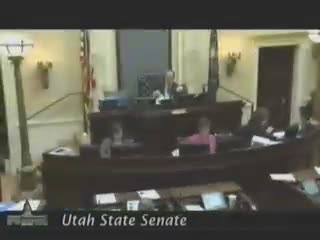
First substitute HB90, which revises definitions and penalties related to late-term abortions, passed the Utah Senate Feb. 18 after extensive floor debate about constitutional risk, medical standards and criminal penalties; the bill was returned to the House (21-4, 4 absent).
The Utah Senate on Feb. 18 approved first substitute House Bill 90, a package of amendments to state abortion law that includes new language defining viability and criminal penalties for illegal abortions.
Sponsor Senator Bramble told colleagues the bill removes an unconstitutional hospital-only requirement for procedures beyond 90 days of pregnancy and clarifies when an abortion may be performed if the unborn child is not viable or to avert the woman's death. The measure also creates a criminal offense "in the event of performing an illegal abortion," described by the sponsor as a second-degree felony for certain violations.
Opponents on the floor, led by Senator McCoy, warned the revised definitions and standards could be constitutionally suspect and invite costly litigation. "I think that this language is constitutionally suspect because while it is taken from other precedents, it is inaccurate to say that this language has been endorsed by any Supreme Court decision," McCoy said, adding that the change could insert prosecutors into complex medical decisions. Other senators described the emotional weight of late-term decisions and urged caution.
Supporters argued the bill incorporates a viability definition drawn from Supreme Court language and that the state has an obligation to protect fetal life in narrow circumstances. After debate, the Senate passed the first substitute HB90 by roll call: 21 yes, 4 no and 4 absent. The measure will be returned to the House for further action.
The transcript records senators' concerns about medical standards, the need for multiple physician opinions in some provisions, and the possibility that courts could strike parts of the law. The bill sponsor said the changes addressed constitutional problems and aimed to make the statute enforceable.
Next steps: HB90 goes back to the House for concurrence or further amendment.