Get Full Government Meeting Transcripts, Videos, & Alerts Forever!
Get email alerts on the Federal Policy And Oversight topic
No spam. Unsubscribe anytime.
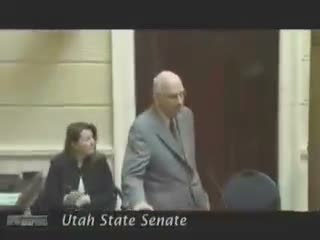
Senator Bennett visits Utah Senate Committee of the Whole to discuss stimulus, TARP, banking oversight and health-care proposal
Summary
U.S. Senator Bennett answered senators’ questions in a Committee of the Whole session, addressing bipartisanship on the stimulus package, differences between TARP and the stimulus, possible bank nationalization, canceled federal leases and the bipartisan Wyden-Bennett health-care proposal.
U.S. Senator Bennett appeared before the Utah State Senate in a Committee of the Whole on Feb. 19 and took questions from senators about the federal response to the economic crisis, energy leases canceled by the Interior Department, and bipartisan health-care legislation he co-sponsored.
Bennett said two distinct federal responses were underway: TARP (Emergency measures aimed at restoring liquidity to credit markets) and the stimulus spending package (intended to address the broader recession). "TARP was aimed at dealing with that and we are seeing signs that TARP was to that extent successful," he said, distinguishing the programs and warning that the stimulus package was rushed by artificial deadlines established during the transition.
On bipartisanship, Bennett said the Senate showed more cross-party cooperation during stimulus drafting than the House, but he acknowledged differences would remain once budget decisions began. He described one-on-one cooperation with Democratic committee chairs, including Senator Bingaman and Senator Dorgan, as productive.
Several senators pressed Bennett on long-term fiscal risks. Asked about the possibility of future inflation from large federal borrowing, he said current low bond yields create a false sense of security and that refinancing could require higher interest rates and trigger inflation down the road. He described entitlement spending — particularly Medicare and Medicaid — as the principal long-term fiscal threat and argued cost containment requires improving quality of care.
On banking oversight and potential government intervention, Bennett said assessing banks' true capital is difficult and he did not rule out temporary nationalization as a possible, though unprecedented, policy tool: "I would not rule out the possibility that Secretary Geithner would recommend temporary nationalization of some banks." He called implementing any such course of action "very, very difficult."
Bennett also responded to concerns about federal leases in Utah canceled by Interior Secretary Ken Salazar. He said the lease applications had been under review for years and had been “subjected to more scrutiny for their environmental appropriateness than any leases that have ever been brought forward,” calling the cancellations "outrageous" and saying he would press Secretary Salazar and transmit a concurrent-resolution copy with a personal letter.
On health-care reform, Bennett described the Wyden-Bennett Healthy Americans Act, a bipartisan plan he co-sponsored with Senator Ron Wyden, saying it aims to expand coverage while reducing costs. He cited a Lewin Group estimate that the plan would cut health-care spending by about $1.5 trillion over 10 years.
After roughly an hour of questioning, the Committee of the Whole dissolved; senators thanked Bennett for his visit and presented him with a small, symbolic ruler and recognized visiting students in the gallery. The Senate then recessed for caucus.