Get Full Government Meeting Transcripts, Videos, & Alerts Forever!
Get email alerts on the Film Incentives topic
No spam. Unsubscribe anytime.
Senate approves cap on motion-picture tax incentive after debate over economic payoff
Summary
Senators debated and adopted an amendment capping a proposed motion-picture tax incentive at $10 million (with $2.2 million already in the fund), approving a 20% production-based credit with pre-approval and post‑performance audits to attract large film projects to Utah.
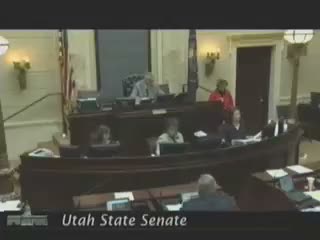
Senate floor debate on Feb. 24 focused on Senate Bill 14, a motion‑picture incentive intended to lure larger film and television productions to Utah.
Senator Hilliard, sponsor of the bill, described Amendment 1 that caps total incentives at $10,000,000 — noting $2,200,000 is already in the fund and the amendment therefore authorizes roughly $7,800,000 of new credits. Hilliard said the credit would be capped at 20% of qualifying in‑state spending, require prior approval of eligible projects, and be paid only after productions spend money in Utah and pass audits by the State Tax Commission and Workforce Services.
Supporters on the floor said the measure would make Utah more competitive with other states that offer larger incentives, create local jobs for crews and supporting businesses, and produce a high return on investment. Senator Morgan, a co‑sponsor, cited studies presented by the Governor’s Office of Economic Development that showed strong multipliers, while supporters from southern Utah emphasized the region’s long history as a film location.
Opponents and questioners pressed for fiscal clarity. Hilliard moved to suspend rules so that a fiscal note — which lagged the bill — would be available before third reading; that motion passed. The amendment capping the incentive at $10 million carried on voice vote and the bill, as amended, was advanced to third reading and placed on the calendar after recorded action showing passage to the third reading calendar.
The action leaves two immediate conditions for final approval: the final fiscal note and any additional language clarifications before third reading. The adopted changes restrict payouts to verified in‑state expenditures and require audits before credits are awarded.