Get Full Government Meeting Transcripts, Videos, & Alerts Forever!
Get email alerts on the SB 87 topic
No spam. Unsubscribe anytime.
Senate advances Preferred Drug List changes; debate centers on prior authorization and fiscal savings
Summary
Senate Bill 87 (Preferred Drug List revisions) was amended on the floor to add a one-year review and then advanced; the Senate recorded 21 yeas, 6 nays and 2 absent and placed the bill on the bottom of the third-reading calendar after extended debate over prior authorization, physician discretion and disputed fiscal savings.
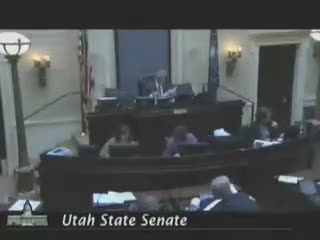
Senate Bill 87, a measure to impose prior-authorization requirements on certain Medicaid prescriptions by adopting a Preferred Drug List (PDL) structure, was debated at length on the Senate floor on Feb. 10, 2009 and advanced after amendment.
Sponsor Senator Christiansen said the amendment (Amendment No. 3) adds a review date after one year and directs the Department of Health to report back to the Executive Appropriations Committee on the program’s performance; the Senate approved the amendment by voice vote. Christiansen described the PDL as a common tool among insurers that can reduce state Medicaid drug spending and said the fiscal note’s savings were calculated by the fiscal analyst.
Opponents and questioners raised concerns about implementation, physician discretion, and the scope of the change. Senator Davis asked that prior-authorization rules be established through the rulemaking process rather than implemented administratively without legislative visibility and noted that most drug classes show high compliance with a PDL except for two problem areas: proton pump inhibitors (PPIs) and long-acting narcotics. Senator Bramble challenged the fiscal-savings figures cited in the bill’s fiscal note and proposed a one-year pilot limited to PPIs to test whether prior authorization produces the forecasted savings.
Sponsor Christiansen and other supporters said similar programs have worked in other states, and medical and pharmacy associations provided support for the bill. After debate the Senate took a roll-call vote: the clerk announced SB87 had received 21 yeas, 6 nays and 2 absent. The measure was placed on the bottom of the third-reading calendar for further action.
Next steps: SB87 will remain on the third-reading calendar for future scheduling; legislators flagged the need to codify the prior-authorization process and to monitor fiscal outcomes closely if the bill advances.