Get Full Government Meeting Transcripts, Videos, & Alerts Forever!
Get email alerts on the Criminal Code Amendment topic
No spam. Unsubscribe anytime.
Senate amends obstruction statute to criminalize warning of wiretap applications
Summary
Senate Bill 112 was amended and approved for third reading to clarify that warning someone of an existing or pending wiretap is a felony, aligning the penalty with disclosure of wiretap information; amendments adjusted wording to match statute.
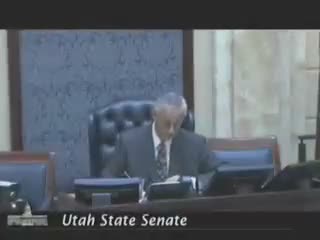
Senate Bill 112 moved on Feb. 9, 2009 to add 'warning someone of an existing or pending wiretap' to the state obstruction-of-justice statute. Sponsor Senator Okerlund told the Senate the change corrects a prior oversight from a 2005 statute and aligns the penalty with existing law for disclosure of wiretap information.
Two floor amendments were offered to ensure consistent wording and penalty language. Amendment No. 1 (passed earlier in committee) was acknowledged as already approved; Amendment No. 2 added the word 'or' on the relevant line to make the statutory language internally consistent. Both amendments were adopted by voice vote and the bill, as amended, was read for a third time and placed at the bottom of the third-reading calendar for final consideration. The sponsor said the change makes the act a felony consistent with disclosing information obtained in a wiretap and noted support from the Commission on Criminal and Juvenile Justice, the Utah Sentencing Commission, the Law Enforcement Legislative Committee, the Utah Council on Victims of Crime and the Utah Board of Juvenile Justice.
The Senate recorded the floor action and the bill will continue through the legislative process as amended.
Ending: The chamber approved amendments and advanced SB112 to third reading; further procedural steps were scheduled according to the Senate calendar.