Get Full Government Meeting Transcripts, Videos, & Alerts Forever!
Get email alerts on the Education topic
No spam. Unsubscribe anytime.
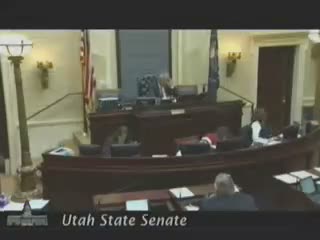
Senate advances SB 48 on competency-based teacher licenses after heated debate
Summary
Senate Bill 48, authorizing competency-based and alternative routes to teacher certification and allowing local school boards or charter schools to request competency-based licenses, cleared procedural hurdles and was placed on the third-reading calendar after extended floor debate, amendments and a roll-call vote.
Senate Bill 48, a measure to expand alternative pathways to teacher certification, was advanced to third reading after extended floor debate and an amendment that explicitly allows a local school board or charter school to request a competency-based license for a person.
Sponsor Senator Chris Butters framed the bill as a response to teacher shortages and a way to let people with substantial marketplace experience teach. "This is long past due," the sponsor said, arguing that professionals with real-world experience can bring valuable skills into classrooms and noting the bill would not mandate hiring practices by school districts.
Senator Greg Valentine proposed amendments to reinstate language making a local school board, a charter school or a person eligible to request the competency-based license; that amendment was adopted. Supporters said the change preserves State Board of Education involvement while widening access to alternate licensing pathways.
Opponents raised concerns about pedagogy, classroom management and unintended consequences for professional standards. "This bill really is an assault on education," Senator Angela Romero said, arguing that effective elementary instruction requires pedagogical training that a single subject-matter test may not guarantee. Senator Jacob Goodfellow similarly warned the bill could open the door to underprepared instructors for foundational elementary skills such as reading.
Several senators sought clarification about hiring authority and post-certification oversight; the sponsor and other proponents emphasized that the bill grants certification pathways but does not compel districts to hire certificate holders and that districts retain hiring discretion and probationary evaluation tools.
Under suspension of the rules, the Senate voted to read SB 48 for a third time and place it on the third-reading calendar; the roll call on that suspension/motion recorded 17 yea votes, 11 nay votes and 1 absent. Senate floor action will continue on the bill on its next third-reading appearance.
The Senate did not adopt a final substantive policy change beyond the amendment described; the next procedural step is formal third-reading consideration and a final passage vote.