Get Full Government Meeting Transcripts, Videos, & Alerts Forever!
Get email alerts on the HB149 Forest Reserve topic
No spam. Unsubscribe anytime.
Senate pauses House Bill 149 after questions on 'special projects' skim and PILT impacts
Summary
Sponsoring senator said House Bill 149 would direct forest-reserve payments to special service districts and prevent large county PILT losses; colleagues pressed for clearer apportionment definitions and the measure was circled for further work.
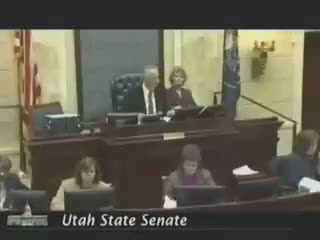
Senator Okerlund, sponsor of House Bill 149, told the Utah Senate on Feb. 11 that the bill aims to direct state forest-reserve (SRS) payments to special service districts for transportation projects so the funds will not reduce Payment in Lieu of Taxes (PILT) entitlements to counties and school districts.
"House Bill 149 is an attempt that has been made for a long time by counties to have some money come back into those areas because of the lack of the ability to tax those areas," the sponsor said, outlining a chart and a proposal to have the state treasurer make SRS payments directly to special service districts. He warned that, without the bill, "counties in the state of Utah stand to lose over $16,000,000 in PILT in 2010 with a total loss of nearly $56,000,000 by the end of fiscal year 2012," and argued that direct payments to service districts would avoid offsets in PILT calculations.
Several senators pressed the sponsor for detail about an apportionment formula in the bill that creates a top-line allocation for unspecified "special projects." Senator Valentine asked "What are the special projects?" and expressed concern the bill could ‘‘abrogate our responsibility on the apportionment’’ by leaving the term undefined. The sponsor replied that federal stipulations govern many qualifying projects on forest lands and reiterated that money directed to special service districts for roads "would not go into that special projects category or fund." Senators urged the sponsor to clarify statutory language and fiscal mechanics before advancing the measure.
After extended questioning about the formula and the potential fiscal effects on school-district allocations and county general funds, the sponsor and other senators agreed to ‘‘circle’’ the bill—pausing floor action to revise language and provide clearer fiscal and apportionment detail.
The Senate did not take a final vote on HB 149; the measure was circled so staff can reconcile the apportionment language and the allocation of funds among 'special projects,' schools and counties before the Senate resumes action.