Get Full Government Meeting Transcripts, Videos, & Alerts Forever!
Get email alerts on the State Budget topic
No spam. Unsubscribe anytime.
Senate approves package of supplemental budget bills to balance shortfall, tapping capital and disaster funds
Summary
The Senate voted to approve a set of supplemental budget bills (House Bills 300, 301 and House Bill 3) that temporarily reduce certain statutory funding floors, sweep disaster recovery funds, and make other one‑time adjustments to close the fiscal shortfall; votes recorded 26–1 and 25–1 on different bills.
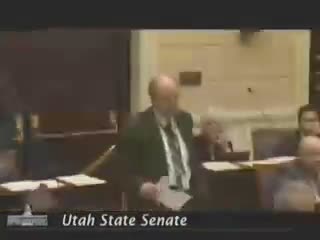
During its floor session the Utah Senate approved a package of supplemental budget measures designed to address a state revenue shortfall. Key measures approved included House Bill 300 (modifying capital improvement appropriations), House Bill 301 (State Disaster Recovery Restricted Account amendments), and House Bill 3 (current fiscal year supplemental appropriations). The bills were considered under suspension of the rules and passed on recorded votes; passage language indicates HB300 passed 26–1 (2 absent) and HB3 passed 27–0 on a later vote.
Senator Hilliard, sponsor for multiple items in the package, explained that HB300 temporarily suspends a statutory requirement that the Capital Improvement appropriation be funded at its usual floor (discussed as 0.9% to 1.1% in statute) for FY2009 and FY2010 to reduce immediate outlays and preserve ongoing funds in other areas. Hilliard said the change is limited to the current and next fiscal year and that the fund balance will still retain significant resources (the fund had been reported in the ballpark of $67–82 million in recent periods and HB300 would lower the draw by approximately $12 million next year, leaving roughly $50 million).
HB301 moves $15 million from a disaster recovery restricted account as a one‑time backfill to balance the budget in the current two fiscal years. In House Bill 3, the sponsor noted a technical correction for childcare TANF funds (an expected $2.7 million reduction was discovered to be only $1 million available), and the Senate concurred with a House amendment to backfill the shortfall with one‑time money.
Senators debated tradeoffs, with some voicing concern about reducing statutory floors for capital improvements and about long‑term consequences; supporters argued the package was necessary to spread the pain across programs and balance the budget in the short term. The measures were transmitted back to the House for the Speaker's signature or for further action per the regular process.
What happens next: The bills will be returned to the House for concurrence or signature as appropriate; sponsors said the changes were targeted to FY2009–FY2010 and expected to be restored in later budgets if revenues permit.