Get Full Government Meeting Transcripts, Videos, & Alerts Forever!
Get email alerts on the Public Health topic
No spam. Unsubscribe anytime.
Senate advances framework to fund local public‑health emergency responses
Summary
The Utah Senate approved on second reading a bill to establish a matching grant fund for local health departments to respond to public‑health emergencies, adopting an amendment to allow nonlegislative funds and administrative costs; the measure moves to third reading.
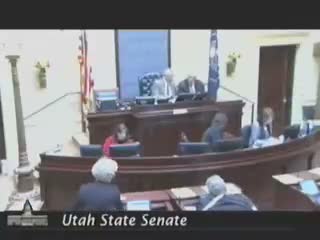
The Utah Senate on Feb. 4 advanced Senate Bill 20, a bill to create a grant fund to help local health departments respond to public‑health emergencies, adopting a floor amendment that clarified allowable funding sources and administrative uses.
Senator Stoll, sponsor of SB20, told colleagues the bill creates a matching grant structure so local health departments can get assistance in events like the tuberculosis outbreak at Snow College and a recent bacterial contamination of public pools. "This bill establishes a grant fund to provide a source of funds for local health departments to deal with such emergencies," he said, and described grants as a 50‑50 match with participating counties.
During floor discussion Senator Stoll moved Amendment No. 2 to make explicit that the fund may receive nonlegislative sources — for example federal grants or funds the governor might make available — and to allow funds to cover program administration. The amendment passed after debate and the bill passed second reading by roll call and was placed on the third‑reading calendar for final consideration. Senator Hilliard raised questions about whether costs recoverable from insurance or responsible parties should be considered; Stoll and other sponsors said the bill primarily envisions outbreak‑type events and that county and local procedures would address certain recovery questions.
Why it matters: the bill establishes a standing funding mechanism so local health departments have immediate access to support for outbreaks or other public‑health crises without requiring an emergency appropriation each time. Sponsors said no appropriation was included this year because of tight budget constraints, but the framework would allow funding in future sessions or from federal or gubernatorial emergency sources.
What happens next: SB20 passed second reading and was placed on the third‑reading calendar for final passage.